Education

Wireless Surveillance Balloon Case Study

Wireless Surveillance Balloon

Surveillance generally refers to monitoring or observing a person or a group of people from a certain distance, frequently, although not necessarily, comprising the use of electronic equipment and/or other technological devices. Wireless surveillance balloon equipment is typically used in warfare and/or in counter-insurgency operations to monitor the activities of an enemy from a distance,

Wireless Surveillance Balloon Case Study Read More »

Traditional and Mechatronics Design – Pedagogy Zone

Traditional and Mechatronics Design

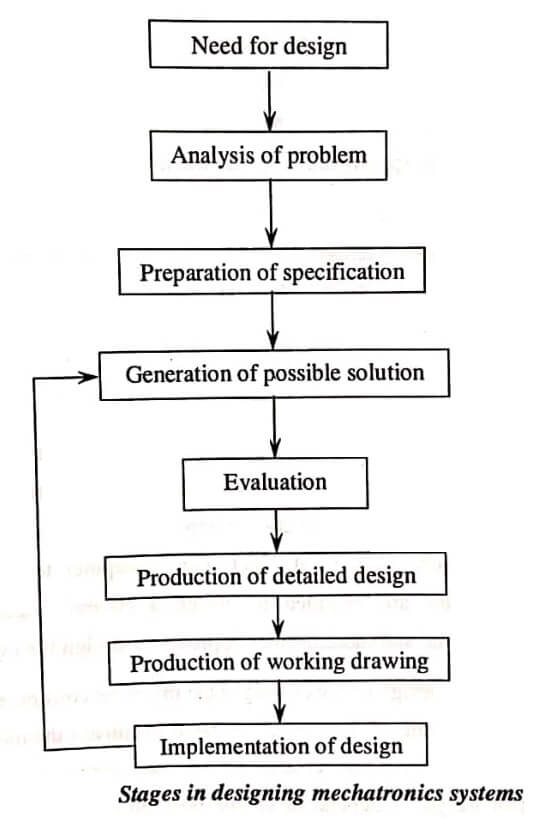
Engineering design is a complex process which involves interaction between many skills and discipline. In traditional design, the components are designed through mechanical, hydraulic or pneumatic components and principles. But in a mechatronics approach, mechanical, electronics, computer technology and control engineering principles are included to design a system. Figure shows the schematic of traditional and

Traditional and Mechatronics Design – Pedagogy Zone Read More »

Difference Between PLC and PC – PLC’s Vs Computers

Difference Between PLC and PC

However, the difference between PLC and PC certain characteristics as follows. The architecture of a PLC is basically the same as that of a general purpose computer. The application of PLC is for industrial environment with wide variation in atmosphere conditions and PLC is very rigid and compact. The PLC programming can be accomplished in

Difference Between PLC and PC – PLC’s Vs Computers Read More »

Data Manipulation – Data Handling Instructions in PLC

Data Manipulation

Data manipulation instructions enable the PLCs to take on additional characteristics that are beyond the conventional relay equivalent instruction. It allows the movement, manipulation or storage of data in either single or multi-word groups from one data memory area of the PLC to another. Therefore, data manipulation can be divided into many categories Data transfer

Data Manipulation – Data Handling Instructions in PLC Read More »

Central Processing Unit (CPU) – Input and Output Modules

Central Processing Unit (CPU)

The “brain” of the system which has three sub-parts. Central Processing Unit (CPU) (i) Microprocessor: Microprocessor caries out mathematic and logical operations. (ii) Memory: The area of the CPU in which data and information is stored and retrieved. It holds the system software and user program. (iii) Power supply: The electrical supply that converts Alternating

Central Processing Unit (CPU) – Input and Output Modules Read More »