Education

Basic Principles of Communication Engineering

An example of communication system

What is Communication ? Communication is the process of establishing connection (or link) between two points for information exchange. In our day to day life we come across many ways of communicate. For communication to take place, three essential things must be present. Sender or Transmitter : It sends information. For example TV transmitting station

Basic Principles of Communication Engineering Read More »
Supercritical Water Cooled Reactor (SCWR)

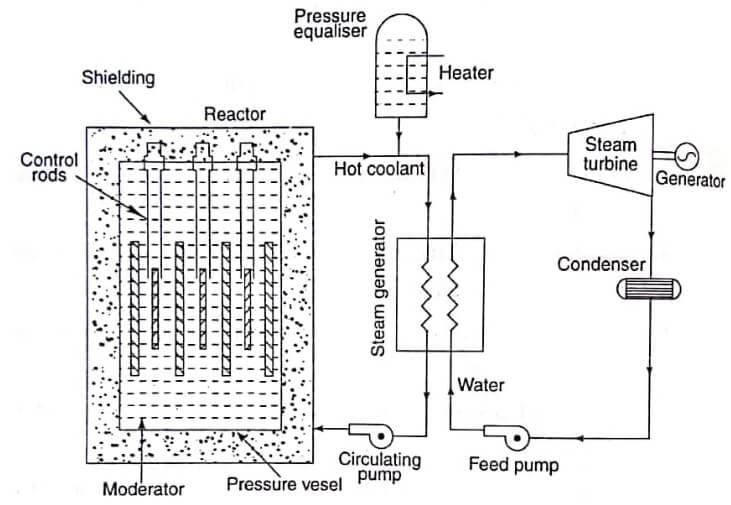
Supercritical Water Cooled Reactor

This is a very high pressure supercritical water cooled reactor which operates above the thermodynamic critical point of water to give a thermal efficiency about one third higher than today’s light water reactors. The supercritical water (25 MPa and 510-550°C) directly drives the turbine without any secondary steam system. Passive safety features are similar to

Supercritical Water Cooled Reactor (SCWR) Read More »

Introduction of Robot – Robotics Vision and Control

Introduction of Robot

The term introduction of robot means different things to different people. Science fiction books and movies have strongly influenced what many people expect a robot to be or what it can do. Sadly the practice of robotics is far behind this popular conception. One thing is certain though robotics will be an important technology in

Introduction of Robot – Robotics Vision and Control Read More »

Hydro Electric Power Plants – Advantage & Disadvantage

Hydro Electric Power Plant

In Hydro electric power plants the energy of water is utilized to move the turbine which intern run the electric generators. Hydraulic energy is converted into Mechanical energy by the turbines, when coupled with generator produces the power. Features of Hydro electric power plants: Large investments Long gestation period Increased cost of power transmission Hydro

Hydro Electric Power Plants – Advantage & Disadvantage Read More »

Stirling Engines – Advantages and Disadvantages

Stirling Engines - Advantages and Disadvantages

Advantages of Stirling engines They can run directly on any available heat source, not just one produced by combustion, so they can run on heat from solar, geothermal, biological, nuclear sources or waste heat from industrial processes. A continuous combustion process can be used to supply heat, so most types of emissions can be reduced.

Stirling Engines – Advantages and Disadvantages Read More »