Electrical

What Device Turns Mechanical Energy into Electrical Energy
Mechanical Energy into Electrical Energy

Have you ever wondered how we get electricity from wind or water? It’s like magic—but it’s all science! The process of turning mechanical energy into electrical energy is a fundamental principle that powers our modern world. From the wind turbines spinning on a hillside to the hydroelectric dams generating power from rushing rivers, the conversion

What Device Turns Mechanical Energy into Electrical Energy Read More »

Breaking Barriers with Next-Gen Radio Antennas: What’s on the Horizon?

Next-Gen Radio Antennas

Key Advancements in Radio Antenna Technology Recent advancements in radio antennas technology have revolutionized the way we communicate and access information. One key advancement lies in the development of phased array antennas, which allow for electronic beam steering without moving parts. This technology enables faster and more precise communication, making it ideal for applications such

Breaking Barriers with Next-Gen Radio Antennas: What’s on the Horizon? Read More »

What are the Four Types of Embedded Systems?

Types of Embedded Systems

Embedded systems are specialized computing systems designed to perform specific tasks within larger systems. These systems are found in various industries, each tailored to meet specific requirements. The types of embedded systems include real-time embedded systems, networked embedded systems, mobile embedded systems, standalone embedded systems, and more. Real-time embedded systems are crucial in applications that

What are the Four Types of Embedded Systems? Read More »

What is Analog and Digital Communication?

Analog and Digital Communication

Analog Communication Analog communication refers to the transmission of data through continuous signals, where the signal varies in a smooth and continuous manner. This method predates digital communication and is still in use today for various applications. In analog communication, the original signal is directly transmitted without any conversion to binary code, unlike digital communication

What is Analog and Digital Communication? Read More »

What is an Integrated Braking System?

Integrated Braking System

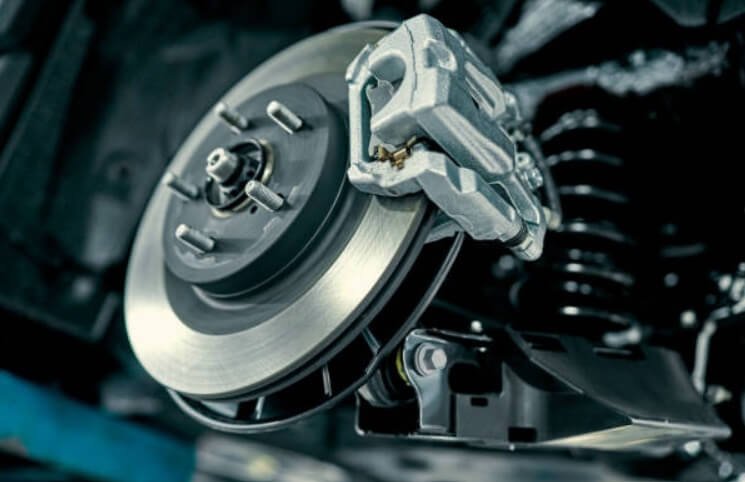
Braking systems in vehicles play a critical role in ensuring safety and control during driving. The integrated braking system is a sophisticated technology that combines various components to enhance braking efficiency. These systems are designed to provide a seamless and responsive braking experience for drivers, improving overall performance and driving experience. The integrated braking system

What is an Integrated Braking System? Read More »

Amplitude Modulation

Amplitude Modulation

Mathematical or Time Domain Representation of an AM Equ-1 Modulating signal [latex] \mathrm{V}_m(t)=\mathrm{V}_m \cos \omega_m t [/latex] Equ-2 Carrier signal [latex] \mathrm{V}_c(t)=\mathrm{V}_c \cos \omega_c t [/latex] Where, [latex] \mathrm{V}_c [/latex] – Amplitude of the carrier signal (volts), and [latex] \mathrm{V}_m [/latex] – Amplitude of the modulating signal (volts). The amplitude of the carrier signal is

Amplitude Modulation Read More »

Need of Modulation or Advantages of Modulation

The modulation process is required in a communication system to achieve the following basic needs Ease of radiation, Adjustment of bandwidth, Reduction in height of antenna, Avoids mixing of signals, Increases the range of communication, Multiplexing, Efficient transmission, and Improved quality of reception. (i) Easy of Radiation As the information signals are translated to higher

Need of Modulation or Advantages of Modulation Read More »