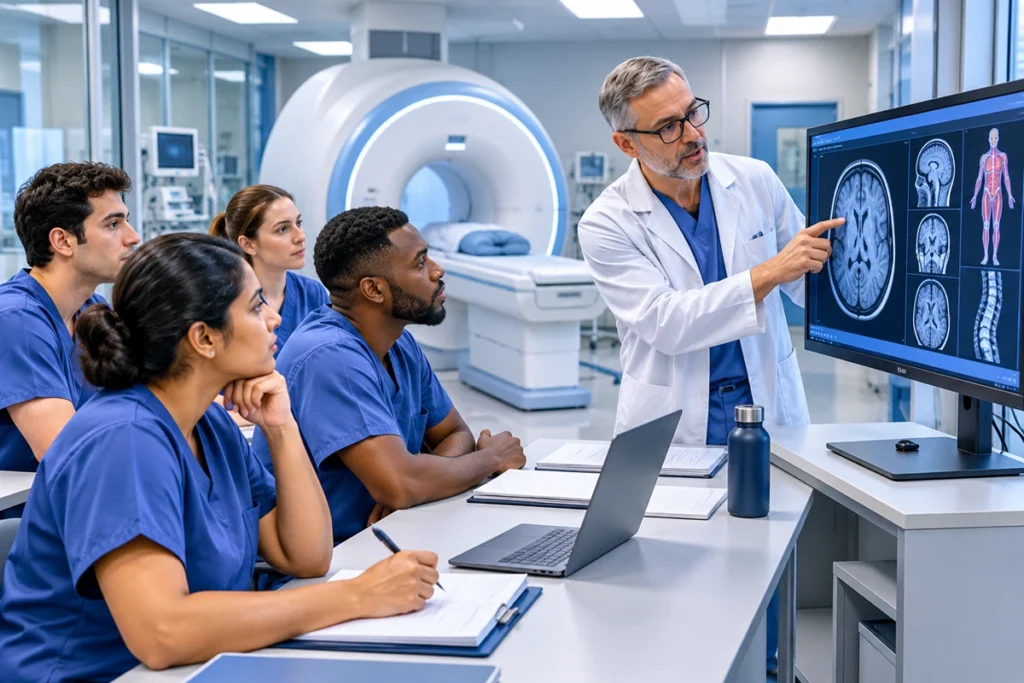
An MRI Tech (MRI Technologist) is a healthcare professional who works in hospitals using an MRI scanner to take detailed images of patients’ internal organs. An MRI helps examine the brain, spine, joints, and other parts of the body.
For those who want to work as an MRI Technologist in the United States, getting the right education, training, and certification is essential. Let’s take a simple look at what you need to study and how to get trained for this career.
What Should You Study to Become an MRI Technician?
To work as an MRI Technologist in the United States, you typically need an Associate Degree or higher.
Fields of Study:
- Radiologic Technology
- Radiography
- Magnetic Resonance Imaging (MRI)
- Medical Imaging Technology
Those who wish to obtain certification through the ARRT Primary Pathway must complete an accredited Associate Degree along with an ARRT-verified MRI educational program.
What Do You Learn in MRI Training?
MRI training includes both classroom instruction and hands-on clinical practice in a hospital setting.
Key Topics Covered:
- Human Anatomy
- MRI Physics – How an MRI scanner works
- Patient Care – How to handle and care for patients
- MRI Safety – Safety protocols and regulations
- Image Evaluation – Reviewing and verifying MRI scans
- Clinical Training – Hands-on training in a hospital
Through this training, you can develop essential skills such as properly preparing patients and capturing high-quality MRI images.
How to Get MRI Certification?
One of the primary certification organizations for MRI Technologists in the United States is the ARRT (American Registry of Radiologic Technologists).
Key Steps to Obtain ARRT Certification:
- Obtain the required educational qualifications.
- Complete an ARRT-approved MRI educational program.
- Fulfill the required clinical training and competencies.
- Meet the ARRT Ethics Requirements.
- Pass the ARRT MRI Certification Exam.
These requirements are essential for obtaining certification and registration.
What Subjects Should You Study in High School?
Students interested in pursuing a career in MRI can focus on specific subjects right from their school days:
- Biology – Knowledge of the human body and its organs.
- Physics – Basic understanding of magnetic fields and medical equipment.
- Chemistry – A foundation for medical sciences.
- Mathematics – Measurements and calculations.
These subjects will help you better understand higher education courses related to MRI.
What Does an MRI Technologist Do?
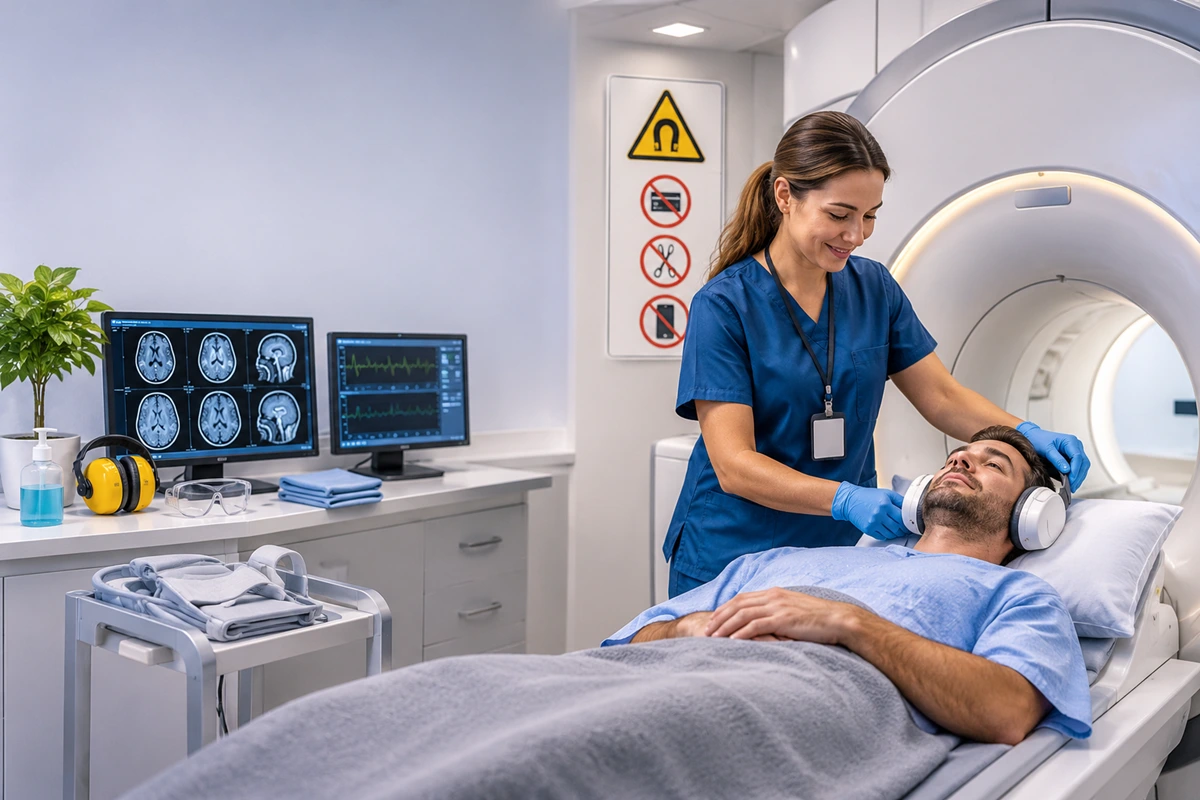
An MRI Technologist’s primary responsibility is to perform MRI scans on patients.
Their Daily Duties Include:
- Preparing patients for MRI exams.
- Checking to ensure patients do not have any metal objects on or inside their bodies.
- Properly operating the MRI scanner.
- Capturing images of the required body parts.
- Explaining exam-related instructions to patients.
- Preparing the MRI images for a radiologist to review.
While the MRI Technologist captures the images, a Radiologist analyzes the medical findings and prepares the final report.
Is a State License Required in the United States?
Regulations for working as an MRI Technologist in the United States vary from state to state.
Some states may require a specific license or certification, while in other states, a separate MRI license is not mandatory. However, many hospitals prefer to hire candidates who hold certifications from recognized organizations such as the ARRT.
How to Start a Career as an MRI Technologist?
If you want to start a career in this field, you must first choose an accredited educational institution. After that, you will need to complete your MRI-related education, clinical training, and the certification exam.
MRI Technologists in the United States earn a competitive salary. According to May 2025 wage data from the U.S. Bureau of Labor Statistics (BLS), the median annual salary for MRI Technologists is $95,480.
Before selecting an educational institution, it is essential to verify its accreditation and ARRT eligibility details.