Robotics
Robot Cell Layouts – Pedagogy Zone
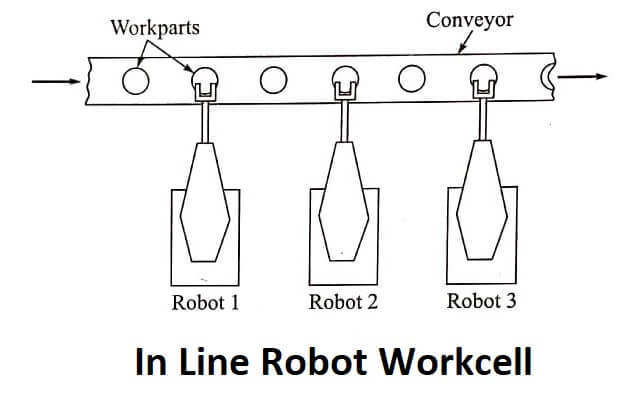
Robot workcells can be organized into various arrangements or layouts. These layouts can be classified into three basic type: Robot-centered cell In-line robot cell Mobile robot cell The…
 How to Edit Statistics in Minecraft Java?
 SAT vs ACT: Which Test Should You Take? A Plain-English Guide
 Difficult Projectile Motion Problems with Solutions
 BCECE Senior Resident/ Tutor Provisional List 2026 Released: Latest Updates, Eligibility Status, and Next Steps
 Top 10 Study Tips for Students in 2025 – Study Smarter, Not Harder
How to Edit Statistics in Minecraft Java?
SAT vs ACT: Which Test Should You Take? A Plain-English Guide
Difficult Projectile Motion Problems with Solutions
BCECE Senior Resident/ Tutor Provisional List 2026 Released: Latest Updates, Eligibility Status, and Next Steps
Top 10 Study Tips for Students in 2025 – Study Smarter, Not Harder
Robot workcells can be organized into various arrangements or layouts. These layouts can be classified into three basic type: Robot-centered cell In-line robot cell Mobile robot cell The…
While the material covered in this chapter so far may appear to be far removed from the factory floor it is useful for providing insight into the operation…
While the general objective of Artificial Intelligence (AI) work is the development of machines which exhibit intelligent behavior, this statement is in itself too broad and ambiguous to…
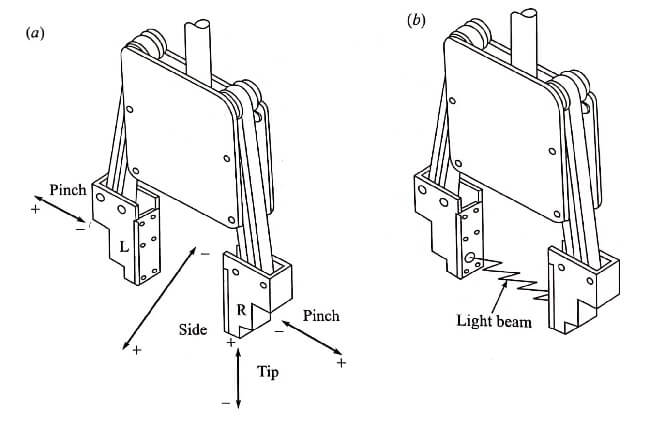
Additional sensing capabilities are available with the optional sensored gripper for the IBM 7565 system. These capabilities include force sensing with strain gauges and optical sensing with a…
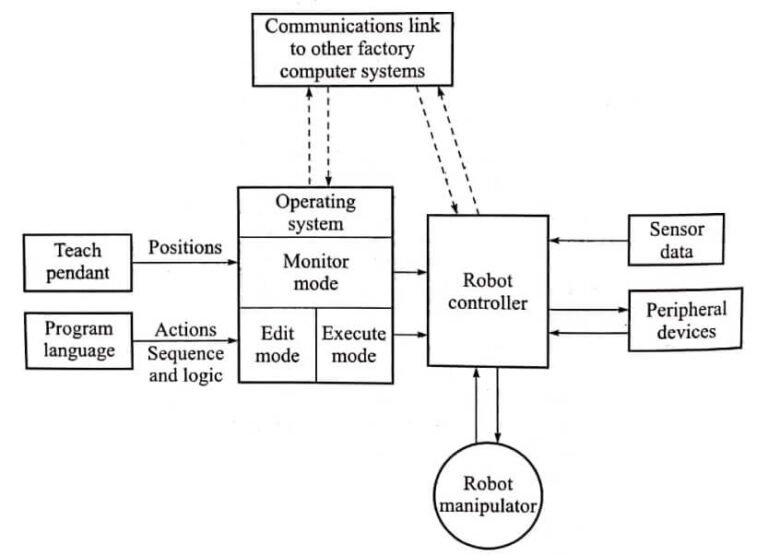
The second generation languages represent the current state of the art in textual languages. In this and the following sections of this chapter, we will describe the features…
The textual robot languages possess a variety of structures and capabilities. These languages are still evolving. In this section we identify two generations of textual languages and speculate…
The first textual robot language was WAVE, developed in 1973 as an experimental language for research at the Stanford Artificial Intelligence Laboratory. Research involving a robot interfaced to…
Irrespective of robot configuration, there are several methods that can be used by the programmer during the teach mode to actuate the robot arm and wrist. We list…
This and the following sections of this chapter will examine the programming issues involved in the use of the lead through methods, with emphasis on the powered lead…
Sometimes, engineers work as consultants to give expert supporting evidence in appropriate circumstances. The concentration of engineers may be on the past, such as explaining the causes of…