

SQL Data Definition and Data Types
SQL uses the terms table, row, and column for the formal relational model terms relation, tuple, and attribute, respectively. We will use the corresponding terms interchangeably. The main…
How to Edit Statistics in Minecraft Java?
SAT vs ACT: Which Test Should You Take? A Plain-English Guide
Difficult Projectile Motion Problems with Solutions
BCECE Senior Resident/ Tutor Provisional List 2026 Released: Latest Updates, Eligibility Status, and Next Steps
Top 10 Study Tips for Students in 2025 – Study Smarter, Not Harder
SQL uses the terms table, row, and column for the formal relational model terms relation, tuple, and attribute, respectively. We will use the corresponding terms interchangeably. The main…
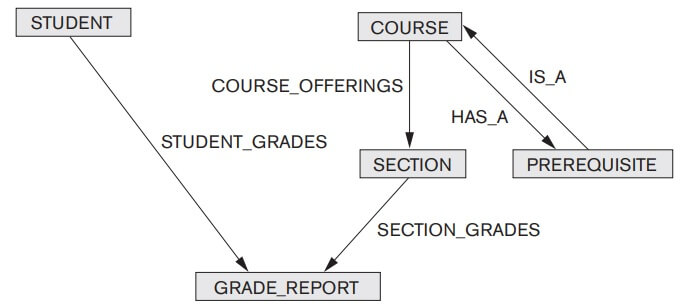
So far, we have discussed the characteristics of single relations. In a relational database, there will typically be many relations, and the tuples in those relations are usually…
The relational model represents the database as a collection of relations. Informally, each relation resembles a table of values or, to some extent, a flat file of records.…
Several criteria are normally used to classify DBMSs. The first is the data model on which the DBMS is based. The main data model used in many current…
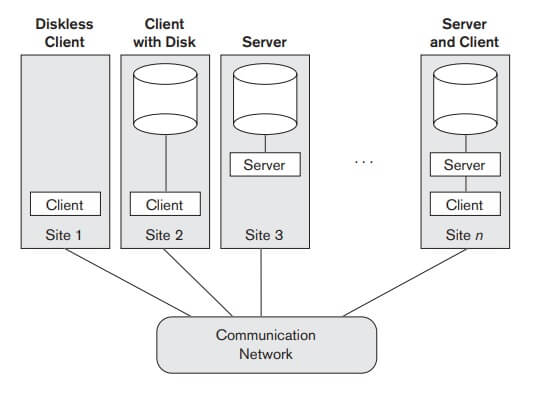
Centralized DBMSs Architecture Architectures for DBMSs have followed trends similar to those for general computer system architectures. Earlier architectures used mainframe computers to provide the main processing for…
A DBMS is a complex software system. In this section we discuss the types of software components that constitute a DBMS and the types of computer database system…
Already we discussed the variety of users supported by a DBMS. The DBMS must provide appropriate languages and interfaces for each category of users. In this section we…
Three of the four important characteristics of the database approach, listed in Section, are (1) use of a catalog to store the database description (schema) so as to…
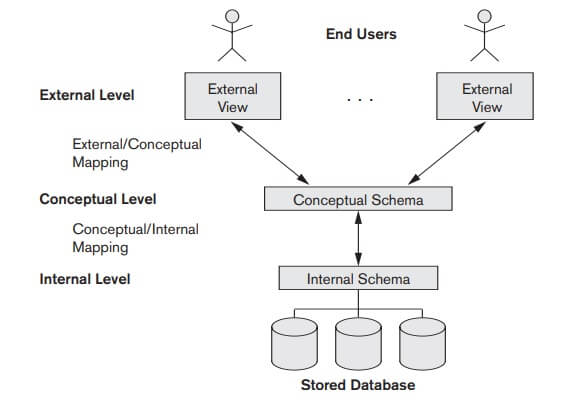
One fundamental characteristic of the database approach is that it provides some level of data abstraction. Data abstraction generally refers to the suppression of details of data organization…
In spite of the advantages of using a DBMS, there are a few situations in which a DBMS may involve unnecessary overhead costs that would not be incurred…