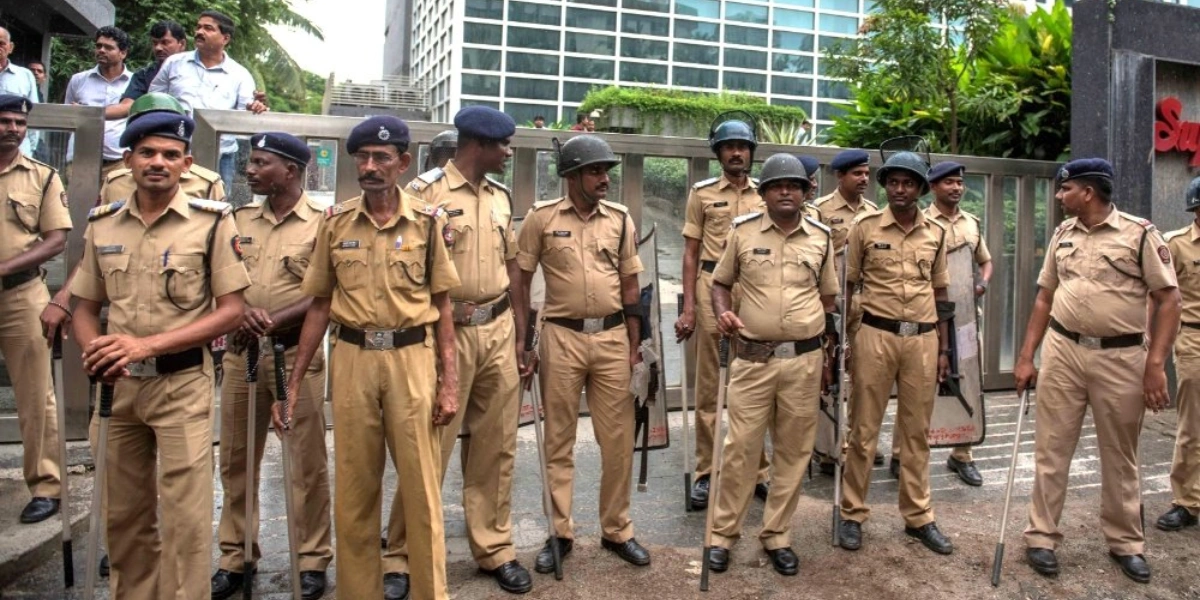
If you have ever wondered why some police officers in Tamil Nadu patrol the streets and file FIRs while others are seen mostly during riots, elections, or guarding convoys, the answer lies in the division between the Taluk (Local) Police and the Armed Reserve (AR) Police.
While both wear the khaki uniform and serve under the Tamil Nadu Police Department, their daily routines, powers, and responsibilities are vastly different. In this post, we break down exactly how they differ, who reports to whom, and the big question: Who is actually more powerful?
1. The Core Difference: “The Mind” vs. “The Muscle”
To understand their roles, think of the police force as a single body.
-
Taluk Police are the eyes, ears, and mind. They interact with the public, investigate crimes, and handle legal paperwork.
-
AR Police are the muscle and shield. They provide the physical strength needed for crowd control, security, and emergency situations.
| Feature | Taluk (Local) Police | Armed Reserve (AR) Police |
|---|---|---|
| Primary Job | Crime investigation, public grievances, filing FIRs. | Crowd control, VIP security, Prisoner escort, Riot control. |
| Public Interaction | Very High (Direct contact daily). | Low (Mostly during conflicts/events). |
| Investigation Power | Yes (Can file FIRs, investigate cases). | No (Cannot investigate cases directly). |
| Work Location | Police Stations (e.g., Adyar Station, Omni Bus Stand Station). | District Ground, Battalions, Armories. |
2. Daily Routine & Responsibilities
A. Taluk Police: The Public Face
These are the officers you see at your local police station. Their daily routine is unpredictable and mentally demanding.
-
Morning Roll Call (7:00 AM): Station officers gather for a briefing by the Inspector or Sub-Inspector (SI) on the day’s special duties.
-
Petition Inquiry: The bulk of their day is spent listening to public grievances (petitions), resolving family/land disputes, and filing FIRs (First Information Reports).
-
Beat Patrol: Constables are assigned specific areas (beats) to patrol, sign beat books, and gather intelligence.
-
Investigation: Visiting crime scenes, collecting evidence, questioning witnesses, and producing accused persons in court.
-
Court Duty: Delivering summons and attending court hearings to ensure convictions.
B. AR Police: The Reserve Force
These officers are stationed in district headquarters and are deployed as needed. Their routine is more regimented and physically demanding.
-
Morning Parade (6:30 AM): Their day starts with physical training (PT) or parade drills to maintain high physical fitness.
-
Guard Duty: They are deployed to guard vital installations like Dams (e.g., Papanasam), Power Houses, the Collectorate, and SP offices.
-
Prisoner Escort: Safely transporting accused criminals from jail to court and back.
-
Bandobast (Security): Deployed in large numbers for festivals (e.g., Jallikattu, Temple festivals), elections, and VIP visits.
-
Maintenance: Cleaning weapons, maintaining police vehicles, and standby duty for riots.
3. Hierarchy & Reporting Structure
Both wings ultimately report to the Superintendent of Police (SP) at the district level, but they have different immediate bosses.
-
Taluk Police Reporting Chain:
-
Constable reports to → Sub-Inspector (SI) / Inspector (SHO)
-
Inspector reports to → Deputy Superintendent of Police (DSP – Sub-division)
-
DSP reports to → Superintendent of Police (SP)
-
-
AR Police Reporting Chain:
-
Constable reports to → Sub-Inspector / Inspector (Armed Reserve)
-
Inspector reports to → DSP (Armed Reserve)
-
DSP (AR) reports to → Superintendent of Police (SP)
-
Key Note: The Taluk DSP (Law & Order) cannot directly command the AR police. If a local station needs AR support (e.g., for a protest), the Taluk Inspector must request it through the District SP’s office.
4. Who is “More Powerful”?
The answer depends on what you define as power:
-
Legal Authority (The Winner: Taluk Police)
-
Taluk Police are generally considered “more powerful” in the eyes of the public. They have the power to arrest, file an FIR, investigate, and charge-sheet a criminal. They can summon people to the station for an inquiry. An AR constable does not have the legal authority to file an FIR or conduct an investigation.
-
-
Physical Force (The Winner: AR Police)
-
In a riot or violent situation, the AR Police are the superior force. They are better trained in weapons handling, lathi charges, and tactical operations. When the Taluk police are overwhelmed by a mob, they call the AR police to take control.
-
5. How They Maintain Law & Order Together
In Tamil Nadu, the system works because these two wings complement each other:
-
Prevention: Taluk police use their local intelligence (informers) to detect trouble early. They arrest “rowdy elements” preventively before a festival or election.
-
Reaction: If a situation escalates (e.g., a caste clash or bus strike), the SP deploys the AR platoons.
-
Domination: The AR police conduct “Flag Marches” to show strength and scare off potential troublemakers, while the Taluk police identify and arrest the ringleaders.
Conclusion: While the Taluk Police are the administrators of law who wield the pen and the code of criminal procedure, the AR Police are the guardians who wield the shield and the lathi. Both are essential for a peaceful Tamil Nadu, but if you have a grievance to report, it is the Taluk police station you need to visit, not the Armed Reserve grounds.
Read also: SLPRB Assam police result 2025 latest