The landscape of technology careers is shifting rapidly, and artificial intelligence is no longer a peripheral specialization—it’s becoming the central skillset employers actively pursue. If you’re considering an online computer science degree in the United States, choosing a program with strong AI and machine learning specializations could be the strategic move that sets your career apart in an increasingly competitive job market.
Why AI Specialization Matters Right Now
The demand for AI-skilled professionals has exploded across industries. Machine learning engineers command an average salary of $181,556 per year, with the top 10% earning upwards of $485,000 annually. Compare that to the national average of $59,428, and you quickly see why specializing in AI during your degree isn’t just a nice-to-have—it’s a competitive advantage that translates directly into earning power.
What’s particularly exciting is that this isn’t limited to tech companies. Healthcare organizations are implementing AI for diagnostic imaging. Financial institutions are deploying machine learning models for fraud detection. Retail companies are using computer vision to revolutionize inventory management. Automotive manufacturers are building autonomous vehicles. The breadth of opportunity means that wherever your interests lie, AI skills create pathways to higher-paying, more impactful roles.
The Bureau of Labor Statistics projects continued strong growth for computer science professionals, and those with AI expertise are commanding the fastest-growing positions. Unlike five years ago when AI was experimental, today’s employers expect candidates to understand machine learning fundamentals, neural networks, and practical applications of AI technology.
Top Online Computer Science Programs with AI Specializations
Several reputable universities now offer fully online computer science degrees with robust AI and machine learning tracks. Here are the programs gaining recognition for quality and accessibility:
Colorado State University’s Online Bachelor of Science in Computer Science features a dedicated AI and machine learning concentration. The program combines traditional computer science fundamentals with advanced coursework in intelligent systems, data science, and machine learning algorithms. At around 120 credits over four years, it’s designed for both recent high school graduates and transfer students, with flexibility that accommodates working professionals.
University of Arizona’s Bachelor of Applied Science in Applied Computing emphasizes applied artificial intelligence, making it particularly valuable if you want practical, immediately employable skills. This degree completion program runs approximately two years for students with an associate degree, covering everything from cybersecurity fundamentals to AI frameworks and tools.
Georgia Tech’s Online Master of Science in Computer Science (OMSCS) has become legendary in tech circles for its affordability and quality, especially the Machine Learning specialization. While this is a graduate program, the curriculum is rigorous and respected by top tech companies. The ML track includes 15 credit hours of specialized coursework in machine learning, deep learning, and reinforcement learning, taught by world-class researchers.
Colorado State University Global’s Online Bachelor of Science offers flexibility by allowing you to choose your baseline major while adding AI and robotics specialization. This flexibility is valuable if you want to tailor your degree to specific interests while maintaining AI competency.
Indiana University Indianapolis (IU Indy) offers dedicated Bachelor of Science and Bachelor of Arts programs in Artificial Intelligence, both fully online. The BS program emphasizes technical and mathematical foundations while the BA provides more curricular flexibility, allowing you to explore AI ethics, cognitive computing, and machine learning applications from multiple angles.
What You’ll Actually Learn in AI-Specialized Programs
Online computer science programs with AI focus typically structure their curricula around several core competencies. You’ll start with programming fundamentals—usually Python, which has become the lingua franca of AI development. From there, programs progress through mathematics (linear algebra, calculus, statistics), data structures, and algorithms—the foundational knowledge that lets you understand why machine learning works the way it does.
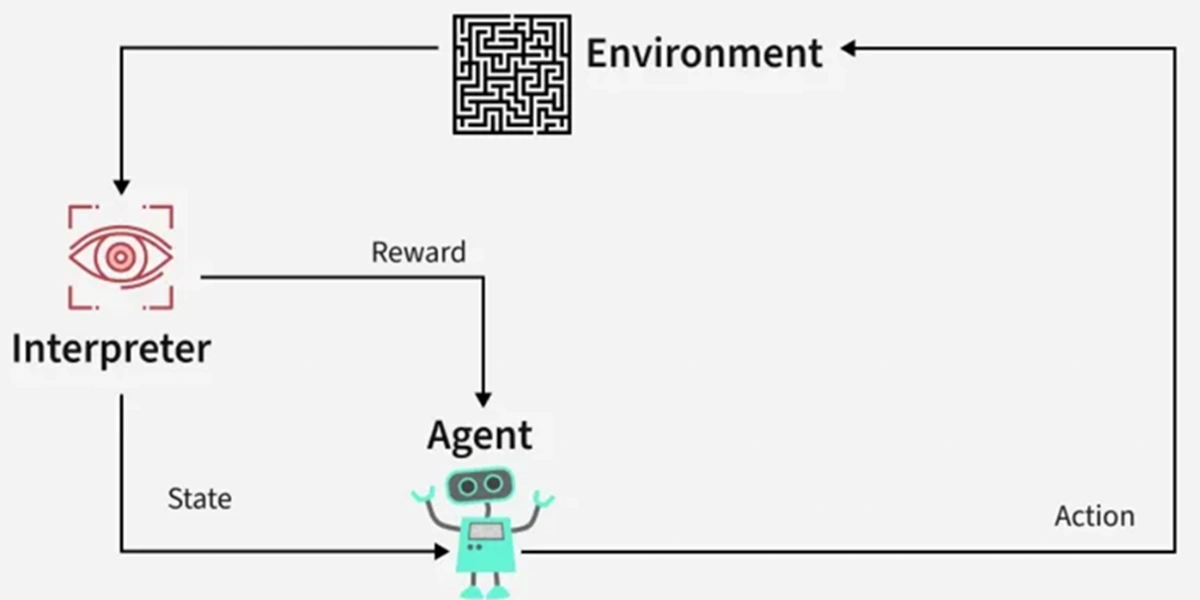
The AI-specific coursework dives into supervised learning (regression and classification), unsupervised learning (clustering and anomaly detection), neural networks, and deep learning. Many programs now include practical applications like computer vision (teaching machines to interpret images), natural language processing (NLP—the technology behind chatbots and language models), and reinforcement learning (how systems learn through interaction and feedback).
What distinguishes quality AI programs is hands-on project work. Rather than just learning theory, you’ll build actual machine learning models, work with real datasets, and deploy systems. Georgia Tech’s program, for instance, includes courses specifically titled “Machine Learning for Trading” and “Machine Learning for Robotics,” emphasizing real-world application. This practical orientation matters enormously when you’re interviewing for your first AI role—employers want to see concrete projects on your resume.
Career Paths for AI-Specialized Computer Science Graduates
Completing an online computer science degree with AI specialization opens several distinct career trajectories, each with strong compensation and growth potential.
Machine Learning Engineer roles focus on developing algorithms and building ML systems. These professionals design, build, and maintain applications that learn from data. The position requires strong programming skills combined with statistical knowledge, and it’s one of the highest-paying technical roles at an average of $181,556 annually.
Data Scientist positions involve extracting insights from complex datasets using statistical analysis and machine learning. Data scientists typically earn around $163,000 annually and work across every industry imaginable—from healthcare organizations analyzing patient data to sports teams optimizing player performance.
AI Software Developer roles focus on building intelligent applications—the systems that incorporate AI capabilities into consumer-facing or business-critical products. These developers need to understand both software engineering principles and AI fundamentals.
AI Research Scientist positions, typically requiring graduate degrees, involve advancing the theoretical foundations of artificial intelligence. These roles average around $150,000 annually and appeal to those interested in innovation at the bleeding edge.
AI Product Manager roles manage the development of AI-powered products from conception through launch. These positions bridge technical understanding and business strategy, typically earning $130,000-$160,000 annually.
Emerging specializations like Computer Vision Engineer (working with image and video data), NLP Engineer (building language-based systems), and AI Ethics Consultant (addressing societal implications of AI) are growing rapidly. The fact that companies are now hiring dedicated ethics consultants shows how seriously they’re taking responsible AI development.
Why Online Format Works for AI Specialization
You might wonder whether online learning is adequate for a technical field like AI. The answer is increasingly yes, particularly for well-structured programs from established universities. Online learners benefit from several advantages: flexibility to balance studies with work or family, access to the same curriculum as on-campus students (many programs use identical materials), often lower tuition costs, and the ability to build your own learning schedule around your peak productivity hours.
Programming skills—central to AI work—are actually well-suited to online learning. You practice on your own computer, build projects independently, and receive feedback on your code. The asynchronous nature of many online programs means you can work through challenging concepts at your own pace rather than being rushed through a semester schedule.
Additionally, online programs often attract working professionals returning to education, creating cohorts that bring real-world experience to discussions and group projects. You’ll learn from classmates who are already working in tech and can share practical insights.
Getting Started: What You Need to Know
Most online computer science programs require a high school diploma or GED at minimum. If you’re considering degree completion programs (like University of Arizona’s), you’ll typically need either an associate degree or relevant work experience. Graduate programs like Georgia Tech’s OMSCS require an undergraduate degree in computer science or related field.
Prior programming experience is helpful but not always required. Many programs include foundational programming courses for students without background, though this extends your time to completion. If you’re concerned about prerequisites, reaching out to admissions advisors at your target programs can clarify specific requirements.
Cost varies significantly. Online bachelor’s degrees typically range from $20,000 to $60,000 total, while master’s programs vary widely. Georgia Tech’s OMSCS is notably affordable at around $10,000 total due to its innovative per-credit-hour pricing. Most universities offer financial aid, and many provide military benefits if applicable.
The Timeline for Specialization
A typical online bachelor’s degree in computer science takes four years at full-time pace, though many students complete them in three years with accelerated progress. If you already have an associate degree, degree completion programs can finish in two years. Master’s degrees typically require two to three years of part-time study, taking you from a bachelor’s degree to specialized expertise relatively quickly.
The time investment pays dividends immediately upon graduation. The AI job market moves fast, and recent graduates with AI specialization often secure positions within two to three months of degree completion, with offers significantly above the baseline computer science salary.
Making Your Decision
Choosing an online computer science program with AI specialization is a strategic investment in your future. The combination of strong foundational computer science knowledge plus targeted AI expertise creates professionals who are immediately valuable to employers. With machine learning engineers earning nearly $294,000 in total compensation and continued demand outpacing supply, the earning potential is substantial.
The flexibility of online learning means you can pursue this education without relocating, leaving your current job immediately, or sacrificing other life commitments. The quality of top-tier online programs—many taught by the same faculty who teach on-campus versions—means you’re receiving education equivalent to traditional university settings.
If you’re serious about building an AI-ready career in 2025 and beyond, an online computer science degree with AI specialization positions you at the intersection of strong technical foundations and the most in-demand specialization in technology today. The question isn’t whether AI skills are worth developing—the evidence clearly shows they are. The question is which program aligns best with your timeline, learning style, and career goals.
Read also: Online Tutoring jobs for Teens