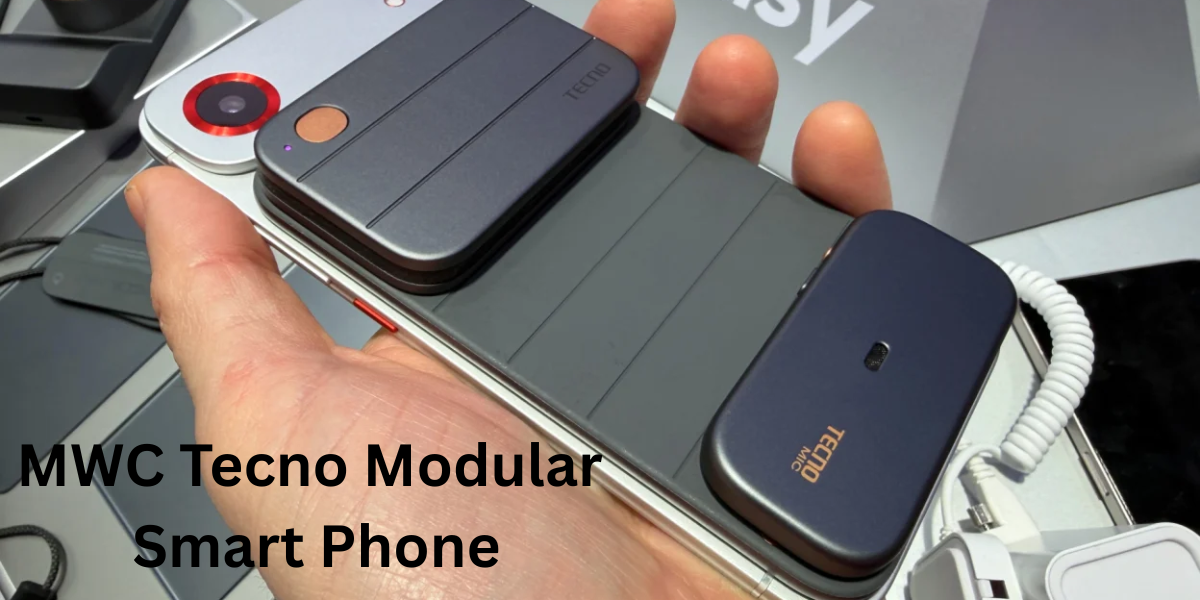
The MWC Tecno Modular Smart Phone 2026 has quickly become one of the most talked-about innovations in the smartphone industry. Revealed at Mobile World Congress (MWC) 2026 in Barcelona, the concept device introduces a fascinating idea: a smartphone that can physically change its capabilities depending on the modules attached to it. Instead of replacing your phone every two or three years, this concept suggests a future where you simply upgrade specific hardware parts like the camera, battery, or microphone.
Imagine carrying a sleek smartphone that transforms into a professional camera, a podcasting device, or even a power-packed battery monster—all by snapping on modular accessories. That’s exactly the vision Tecno is presenting. The company introduced a magnetic modular system that allows components to be attached in seconds without bulky designs or complicated setups.
The concept also highlights an industry shift toward hardware flexibility and sustainability. Instead of discarding entire devices for small upgrades, modular technology allows users to extend the life of their phones. With rising electronic waste worldwide, this design philosophy could change how manufacturers and consumers think about device upgrades.
This article explores everything you need to know about the MWC Tecno Modular Smart Phone 2026, including its technology, design, modular accessories, potential impact on the smartphone market, and whether modular phones might finally become mainstream.
What Was Announced at Mobile World Congress 2026
TECNO’s Innovation Showcase
Mobile World Congress is often described as the global stage for the future of mobile technology, and the 2026 edition lived up to that reputation. Alongside new AI devices, foldable phones, and smart gadgets, Tecno unveiled several futuristic concepts. Among them were the Camon 50 series smartphones, AI-powered devices, and modular design experiments intended to showcase the company’s innovation roadmap.
However, the star attraction at the Tecno booth was undeniably the modular magnetic smartphone concept. While other companies focused mainly on camera upgrades or AI features, Tecno presented something radically different—hardware customization through attachable modules. Technology journalists quickly highlighted it as one of the most creative devices at the event.
Industry observers noted that the device was designed to challenge the traditional smartphone model, where hardware components are permanently integrated. Instead of forcing users to buy a completely new phone for upgrades, Tecno’s concept allows plug-and-play hardware expansion.
Why the Modular Concept Stole the Spotlight
The modular concept stood out at MWC because it addressed one of the biggest frustrations in modern smartphones: lack of flexibility. Most phones today lock users into a single configuration, meaning the camera, battery, storage, and hardware cannot be upgraded.
Tecno’s prototype flips that idea. According to demonstrations at MWC, users can attach modules such as telephoto lenses, microphones, and additional batteries using magnetic connectors.
This approach sparked curiosity among attendees because it merges two important trends: customization and portability. Instead of carrying multiple devices like cameras or recording equipment, a single smartphone can adapt to different scenarios.
The device also grabbed attention because of its slim design. Despite supporting hardware attachments, the base phone reportedly measures only 4.9mm thick, making it one of the thinnest modular smartphone concepts shown so far.
Background of Modular Smartphones
Early Attempts at Modular Devices
The idea of modular smartphones isn’t entirely new. For years, tech companies have experimented with the concept of phones whose parts can be swapped or upgraded. One of the most famous examples was Google’s Project Ara, which envisioned a phone composed of interchangeable blocks like LEGO pieces.
Other brands also tried modular concepts, including Motorola’s Moto Mods ecosystem, where accessories like speakers and cameras snapped onto the back of compatible phones. While these attempts generated excitement initially, they never became mainstream products.
The main challenge was balancing modularity with design simplicity. Many earlier modular phones became bulky or complicated, making them less attractive than traditional smartphones.
Why Modular Phones Previously Failed
Several factors caused earlier modular smartphone attempts to struggle in the market. One major issue was ecosystem support. Modular devices depend on a large variety of accessories, and without strong developer or manufacturer support, the concept quickly loses momentum.
Another problem was cost and complexity. Designing interchangeable hardware components can increase manufacturing costs. Consumers also found it confusing to choose from multiple modules rather than buying a simple all-in-one phone.
There were also engineering limitations. Integrating detachable hardware without affecting durability, battery life, or performance proved extremely difficult.
Tecno’s approach attempts to solve these problems with a simpler design. Instead of fully removable internal parts, the company uses magnetic external modules that attach seamlessly to the phone’s rear panel.
Tecno’s Magnetic Interconnection Technology
How the Magnetic Modular System Works
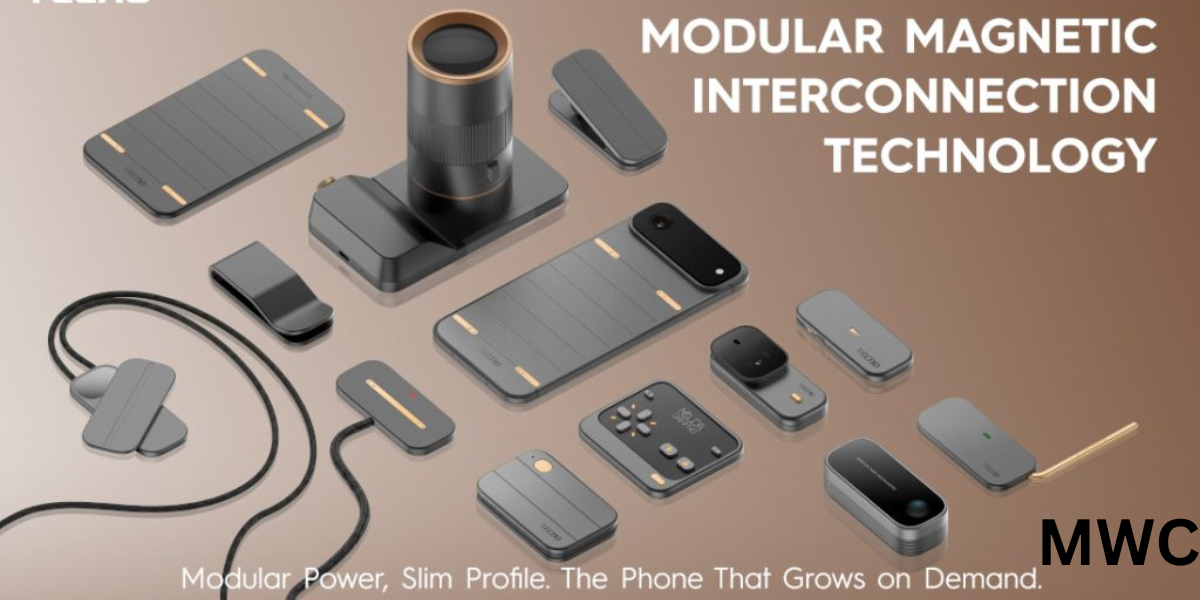
The key innovation behind the MWC Tecno Modular Smart Phone 2026 is what Tecno calls Magnetic Interconnection Technology. This system allows hardware modules to snap onto the phone’s back panel using magnets combined with electronic connectors.
Once attached, the modules communicate with the smartphone through pogo-pin connectors and wireless protocols such as Bluetooth, Wi-Fi, or mmWave connectivity.
This design ensures that the modules are recognized instantly by the phone’s software. For example, attaching a camera module automatically activates additional camera features, while connecting a battery pack expands the device’s power capacity.
The simplicity of the magnetic attachment system means users can swap modules within seconds, similar to attaching a magnetic charger. This convenience is a major advantage compared with earlier modular phone concepts that required disassembling parts of the device.
Eight-Zone Magnetic Alignment Design
One of the most interesting engineering elements is the phone’s eight-zone magnetic alignment system. The back panel includes dedicated zones that guide each module into the correct position.
This alignment system serves several purposes:
- Ensures precise connection with pogo-pin connectors
- Maintains strong magnetic stability
- Prevents incorrect placement of accessories
Think of it like a magnetic docking station built into your smartphone. Instead of guessing where a module should go, the phone automatically aligns it perfectly.
This approach significantly improves usability and ensures that even non-technical users can easily attach or remove modules without worrying about compatibility or damage.
Key Features of the MWC Tecno Modular Smart Phone 2026
Ultra-Thin Design and Hardware Build
Despite its modular capabilities, the Tecno concept phone is designed to remain extremely thin and portable. Reports from MWC indicate that the base device measures around 4.9 mm in thickness, making it one of the thinnest smartphone concepts showcased at the event.
Maintaining such a slim profile while supporting external hardware modules is a remarkable engineering achievement. Most modular devices historically became bulky because of internal connectors and detachable parts. Tecno avoids this by moving most of the modular functionality to the external magnetic system.
The phone also comes in two design variants:
| Variant | Design Style | Material Finish |
| Atom Edition | Minimalistic futuristic look | Silver aluminum with red accents |
| Moda Edition | Fashion-inspired design | Darker finish with Greek-inspired style |
Both variants emphasize the company’s vision of combining technology with aesthetics, proving that modular smartphones do not have to look industrial or bulky.
Magnetic Add-On Accessories
The real magic of the Tecno modular smartphone lies in its accessories. These attachable modules expand the phone’s capabilities depending on the user’s needs.
Telephoto Lens Module
One of the most exciting modules demonstrated at MWC was a large telephoto camera lens that magnetically attaches to the back of the phone.
This module transforms the smartphone into something closer to a professional camera. It allows for higher optical zoom levels and improved image quality compared with standard smartphone lenses.
Battery Pack and Power Accessories
Another module showcased was a 3000mAh magnetic battery pack, designed to extend the device’s battery life when needed.
Instead of carrying a bulky power bank, users can simply snap the battery module onto the phone. This makes it especially useful for travelers, gamers, or content creators who rely heavily on their devices.
Modular Accessories Demonstrated at MWC 2026
Camera Modules and Action Cameras
The modular ecosystem demonstrated at MWC included several camera-focused accessories. In addition to telephoto lenses, Tecno showcased an action camera module that could potentially allow users to record high-quality video from different angles.
For vloggers and content creators, this could be a game-changer. Instead of purchasing separate cameras and mounts, the smartphone itself becomes the central hub for video production.
The modular approach also opens the door for future accessories such as macro lenses, night photography sensors, and even professional gimbals. Each of these modules could transform the smartphone into a specialized device depending on the user’s needs.
Audio and Productivity Modules
Tecno also demonstrated modules designed for audio recording and productivity tasks. One example included a magnetic microphone module, which can significantly improve audio quality for interviews, podcasts, or video recordings.
This idea shows how modular smartphones could appeal not only to everyday consumers but also to professionals. Journalists, vloggers, photographers, and business users could customize their phone setups based on their workflow.
Benefits of Modular Smartphones
Modular smartphones offer several potential advantages over traditional designs. First and foremost is customization. Instead of relying on a fixed hardware configuration, users can choose which modules they want to use.
Another major benefit is sustainability. Because modules can be upgraded individually, users may not need to replace their entire phone when technology improves. This could significantly reduce electronic waste, which has become a growing environmental concern.
Modular phones also offer specialized functionality. A photographer can attach a camera module, while a gamer could attach additional cooling or battery accessories.
Ultimately, the concept allows a smartphone to function like a multi-tool device, adapting to different situations instead of forcing users to buy multiple gadgets.
Potential Challenges and Limitations
While the modular concept is exciting, several challenges remain before it can become mainstream. The biggest question is ecosystem support. For modular smartphones to succeed, accessory manufacturers must develop a wide range of compatible modules.
Another challenge is cost. Modular accessories may increase the total cost of ownership compared with buying a single integrated smartphone.
Durability could also be a concern. Although magnetic attachments are convenient, they must remain secure enough to handle daily use without falling off or disconnecting unexpectedly.
Finally, there is the question of software optimization. Each module must integrate seamlessly with the phone’s operating system to ensure a smooth user experience.
Comparison with Traditional Smartphones
| Feature | Traditional Smartphones | Tecno Modular Smartphone |
| Hardware | Fixed components | Expandable modules |
| Upgradeability | Limited | High |
| Customization | Minimal | Extensive |
| Sustainability | Lower | Potentially higher |
| Flexibility | Single device function | Multiple functions |
Future Impact on the Smartphone Industry
If Tecno successfully commercializes the MWC Tecno Modular Smart Phone 2026, it could reshape how smartphones are designed and sold. Instead of releasing entirely new devices every year, manufacturers might focus on developing modular ecosystems.
This approach could also create new business opportunities for accessory developers and hardware startups. Imagine a marketplace where third-party companies design modules ranging from gaming controllers to scientific sensors.
Although the Tecno modular phone is currently a concept device, many experts believe that elements of this technology could appear in future commercial smartphones.
Conclusion
The MWC Tecno Modular Smart Phone 2026 represents a bold vision for the future of mobile technology. By introducing magnetic hardware modules, Tecno challenges the long-standing tradition of fixed smartphone designs.
The concept demonstrates how smartphones could evolve into adaptable platforms capable of supporting a wide range of accessories. From camera lenses and microphones to battery packs and action cameras, modular technology opens the door to a new level of device customization.
While challenges remain—particularly in terms of ecosystem development and cost—the idea is undeniably intriguing. If Tecno or other manufacturers refine this approach and bring it to market, the smartphone industry could experience its most significant transformation in years.
Read also : RPSC CCE Admit Card 2026