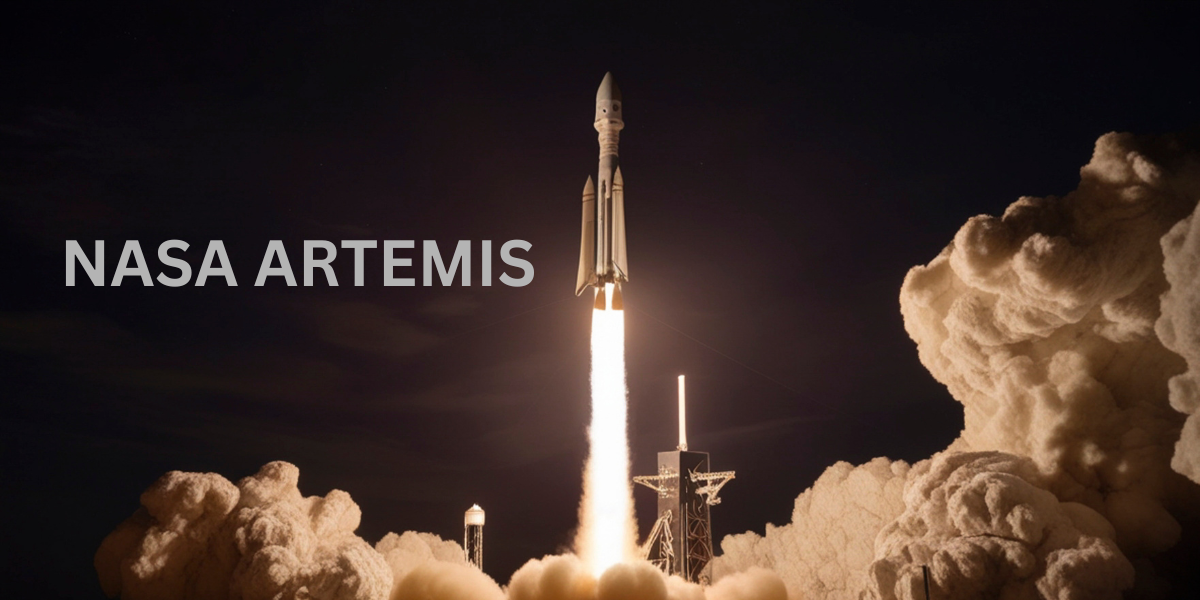
Artemis isn’t just a mission; it’s a journey. It’s NASA’s long-term plan to establish a sustainable human presence on the Moon and prepare for even more ambitious missions to Mars. This new era of space exploration builds on decades of research, technological advancement, and international partnerships.
Artemis I Recap
Artemis I, an uncrewed mission, successfully tested the Space Launch System (SLS) rocket and the Orion spacecraft in 2022. It laid the foundation for what’s next — sending humans beyond Earth’s orbit again.
NASA Artemis Rocket Launch 2026 Overview
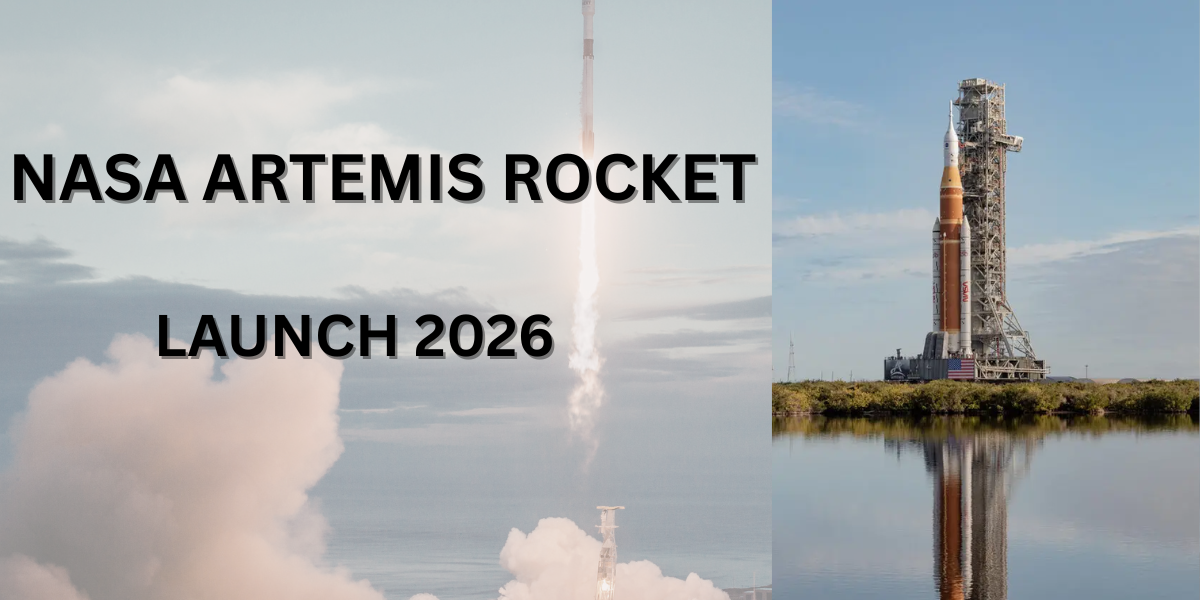
The 2026 launch centers around Artemis II, NASA’s first crewed lunar mission since Apollo 17 in 1972. This mission will send four astronauts on a 10-day lunar flyby, where they will orbit the Moon and return safely to Earth, testing deep space systems along the way.
Mission Objectives
Artemis II’s goal isn’t landing — it’s proving readiness. NASA will test life support systems, spacecraft performance, and deep-space navigation to pave the way for Artemis III — where astronauts will actually land on the Moon.
Meet the Crew
Reid Wiseman (Commander)
Victor Glover (Pilot)
Christina Koch (Mission Specialist)
Jeremy Hansen (Mission Specialist — Canadian Space Agency)
Each astronaut brings a unique blend of experience and expertise to this historic mission.
Space Launch System (SLS) & Orion Spacecraft
NASA’s Artemis missions ride on two key technological marvels:
SLS Rocket Specs
The Space Launch System (SLS) is a super-heavy-lift rocket designed to send Orion and payloads to deep space. Standing nearly 322 feet tall, it’s one of the most powerful rockets ever built.
Orion Crew Module
The Orion spacecraft is the crew’s home during transit. It’s equipped with life support, communication, and navigation systems to ensure astronaut safety throughout the mission.
Current Status: Launch Preparations
NASA is deep in final preparations for the NASA Artemis Rocket Launch 2026 — namely the Artemis II wet dress rehearsal. This is a full countdown simulation involving fueling, system checks, and timeline rehearsals without the crew onboard.
Tanking and Fueling Tests
The wet dress rehearsal involves loading liquid hydrogen and liquid oxygen into the SLS rocket’s tanks — more than 700,000 gallons of cryogenic propellant. The aim is to simulate every step of launch day to identify issues before the actual blastoff.
Technical Challenges & Fuel Leak Concerns
No space mission is without risks — and Artemis II has encountered a few.
Fuel Leak During Rehearsals
Recently, NASA detected a fuel leak during the wet dress rehearsal, forcing engineers to pause fueling operations to investigate and fix the issue.
Delays like these could push the launch later into the mission window if not resolved quickly.
Weather Delays
Unusually cold weather and strong winds in Florida have already postponed some rehearsals and tests. These environmental challenges could impact readiness and potential launch dates.
Launch Window and Scheduling
The official launch window for Artemis II opens on February 8, 2026, but final confirmation depends on NASA’s technical go/no-go decisions.
NASA has identified multiple possible launch opportunities through early February and into March, giving some flexibility if delays continue.
Why This Mission Matters
There’s more riding on Artemis II than just another launch:
It’s the first time humans will travel beyond low Earth orbit since 1972.
It validates systems for future lunar landings.
It inspires a new generation of scientists, engineers, and dreamers.
Looking Ahead: Artemis III and Beyond
Artemis III is scheduled as the next step, targeting an actual lunar landing at the Moon’s south pole no earlier than 2028. This mission will build on the data from Artemis II and push human exploration even further.
Conclusion
The NASA Artemis Rocket Launch 2026 marks a pivotal moment in space exploration. With crewed lunar missions returning after half a century, each test, delay, and milestone brings humanity closer to the Moon and beyond. From wet dress rehearsals and fueling tests to launch windows and technical solutions, this mission captures our collective imagination and scientific progress like no other.
Read also : AIIMS CRE Group A B C Result 2026