Definition of Metrology - Linear and Angular Measurement

Definition of Metrology – Linear and Angular Measurement

Definition of metrology is a “Science of measurement”. The most important parameter in metrology is the length. Metrology is divided into Industrial Metrology and Medical Metrology under consideration of its application and may be divided into metrology of length and Metrology of time under consideration of its quantity. Definition of Metrology is mainly concerned with

Definition of Metrology – Linear and Angular Measurement Read More »

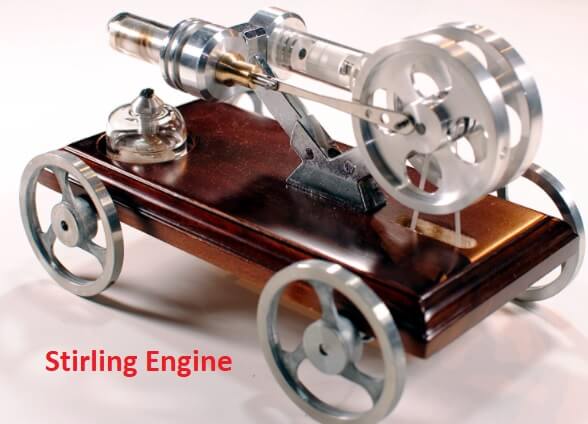
Stirling Engines - Advantages and Disadvantages

Stirling Engines – Advantages and Disadvantages

Advantages of Stirling engines They can run directly on any available heat source, not just one produced by combustion, so they can run on heat from solar, geothermal, biological, nuclear sources or waste heat from industrial processes. A continuous combustion process can be used to supply heat, so most types of emissions can be reduced.

Stirling Engines – Advantages and Disadvantages Read More »

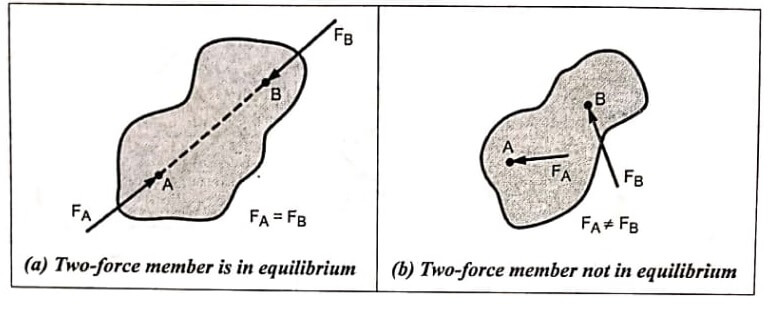
What is Static Force Analysis

What is Static Force Analysis – Dynamic Force Analysis

In this chapter, we shall discuss the static and dynamic force analysis of planar mechanisms in detail. In our studies of “Kinematics of Machinery“, we limited ourselves to consideration of the geometry of the motions and of the relationships between displacement and time. But the force required to produce those motions were not considered. In

What is Static Force Analysis – Dynamic Force Analysis Read More »

Theory of Machines

Theory of Machines and Branches – Dynamics of Machinery

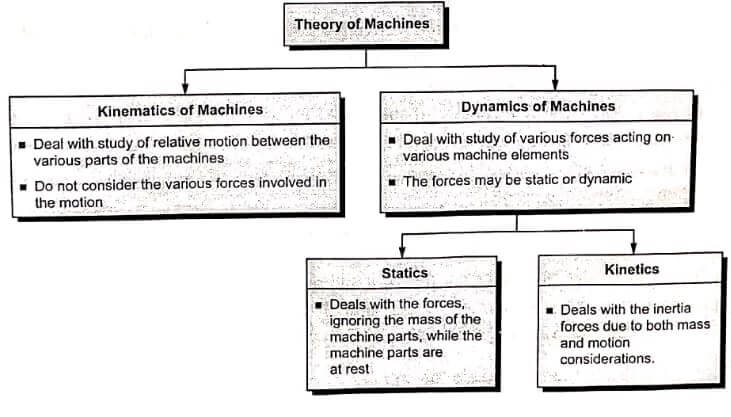
The subject ‘Theory of Machines’, also known as ‘Mechanics of Machines’, comprises: (i) the study of the relative motion between the parts of a machine, and (ii) the study of the forces which act on those parts. It is understood that most mechanical engineering activities revolve around a mechanical system whose function depends on the

Theory of Machines and Branches – Dynamics of Machinery Read More »