Physics
Polar and Non-Polar Molecules
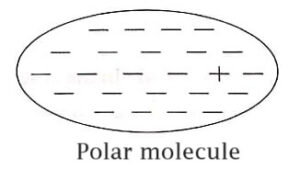
Depending on the separation between the centre of gravity of positive charges and the centre of gravity of negative charges, the dielectrics are classified as polar…
76 articles
Depending on the separation between the centre of gravity of positive charges and the centre of gravity of negative charges, the dielectrics are classified as polar…
The dielectric materials may be classified as solid, liquid and gas dielectrics. Solid form In solid form they may be polymeric such as nylon, pvc, rubber,…
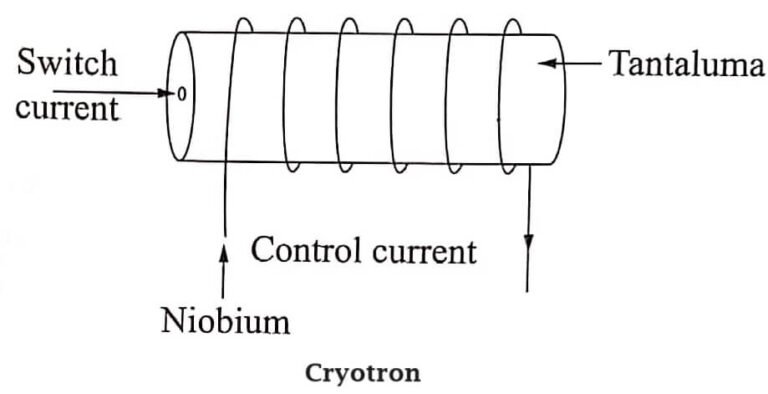
Engineering applications Based on their properties, they have the following applications. Since there is no loss in power (zero resistivity) super conductors can be used for…
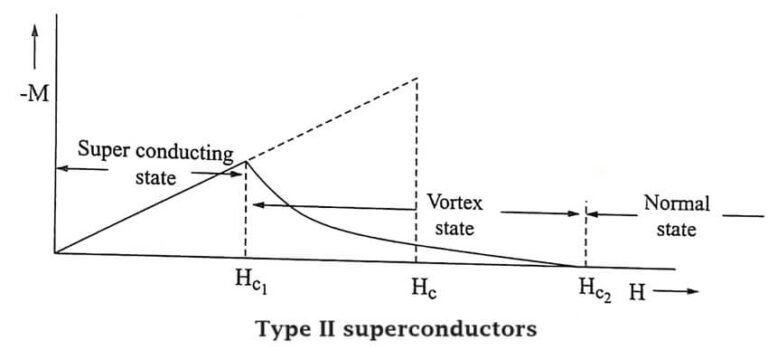
Based on the value of superconducting transition temperature, superconductors are divided into two categories: (i) Low temperature superconductors (ii) High temperature superconductors S.No Low Temperature superconductor…
Impurities : When the impurities are added to superconducting material, the properties can be changed abruptly. In particular the magnetic properties can be changed. Size :…
In 1911, Kammerlingh onnes while studying the electrical behaviour of metals at low temperatures, he observed that the resistivity of impure metals decreased with temperature and…
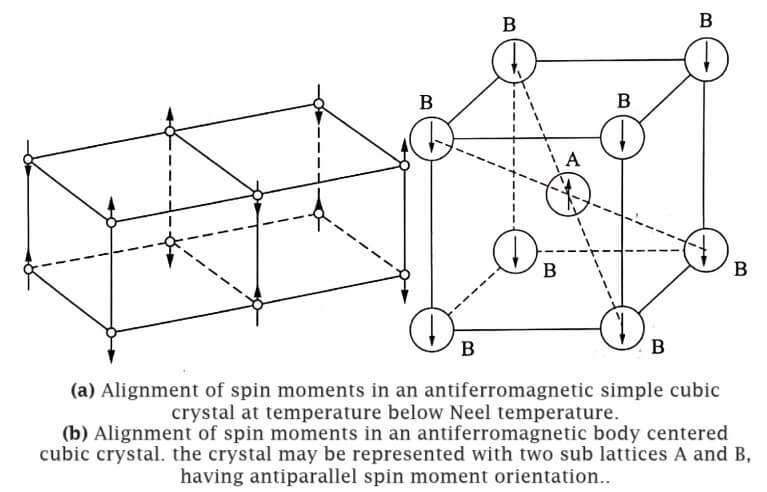
Based on permanent magnetic dipoles, materials are further classified into Antiferromagnetic materials Ferrimagnetic materials Antiferromagnetic materials Definition: When the magnitudes of all the antiparallel aligned magnetic…
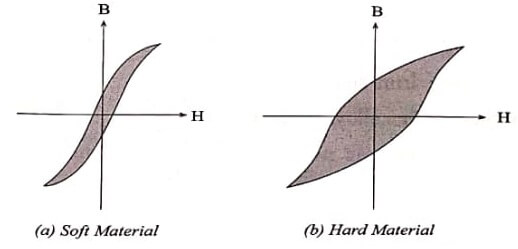
Based on the area of the hysteresis loop, the magnetic materials are classified into soft and hard magnetic materials. Generally the magnetic materials are classified into…
Hysteresis Loop: The word hysteresis literally means lagging behind. “Hysteresis is the phenomenon of lagging of magnetic induction (B) behind the magnetising field (H) of a…
Weiss put forward a second hypothesis, namely domain hypothesis. He postulated that the atomic dipole of an atom strongly interacts to the neighbouring atom by a…