October 2021

Speed Control of DC Shunt Motor – Pedagogy Zone

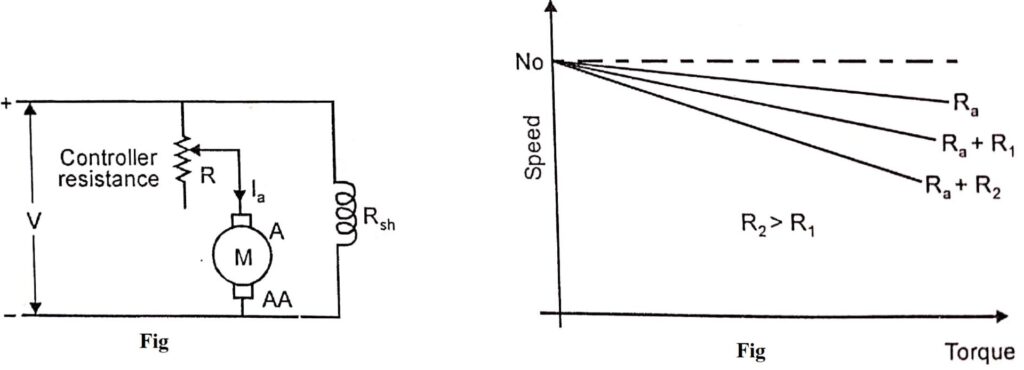
[sc_fs_faq html=”true” headline=”h2″ img=”” question=”Mention speed control methods of DC shunt motors?” img_alt=”” css_class=””] 1. Armature control method, 2. Field control method, 3. Voltage control method [/sc_fs_faq] The speed of a dc motor is given by [latex]N=\frac{V-I_{a} R_{a}}{Z \phi}\left(\frac{A}{P}\right) \text { (or) } \quad N=\frac{K\left(V-I_{a} R_{a}\right)}{\phi} [/latex] where  V = applied voltage, Ia = armature current Ra

Speed Control of DC Shunt Motor – Pedagogy Zone Read More »
DC Generator Characteristics

Characteristics of DC Generator – Pedagogy Zone

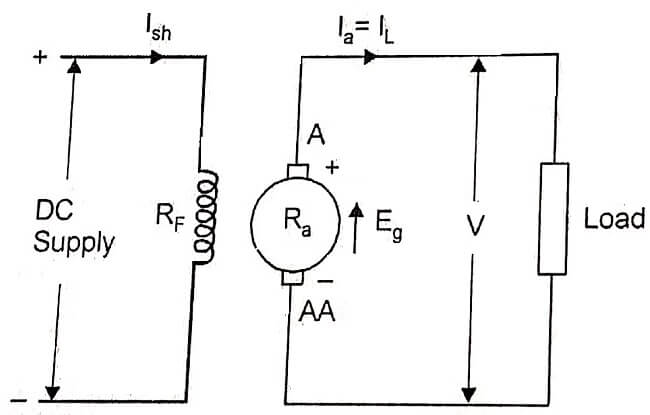
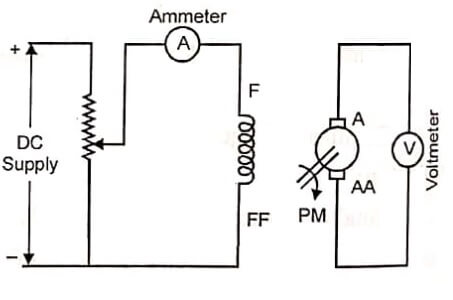
There are three types of characteristics. Open circuit characteristics (OCC) or magnetisation characteristics (E2 versus If). Internal characteristics or total characteristics (E versus Ia). External characteristics or voltage regulated characteristics (V versus IL) Separately excited DC generator characteristics For a given dc generator it is clear that the induced emf is proportional to the flux

Characteristics of DC Generator – Pedagogy Zone Read More »

DC Generator

DC Generator Principle and Parts of DC Generator

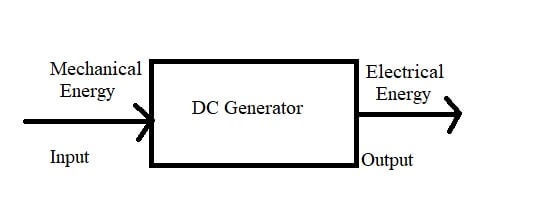
DC Generator : An electrical generator is a rotating machine which converts mechanical energy into electrical energy. It is shown in figure. This energy conversion is based on the principle of electromagnetic induction. According to Faraday’s laws of electromagnetic induction, whenever a conductor is moved in a magnetic field, dynamically induced e.m.f is produced in

DC Generator Principle and Parts of DC Generator Read More »