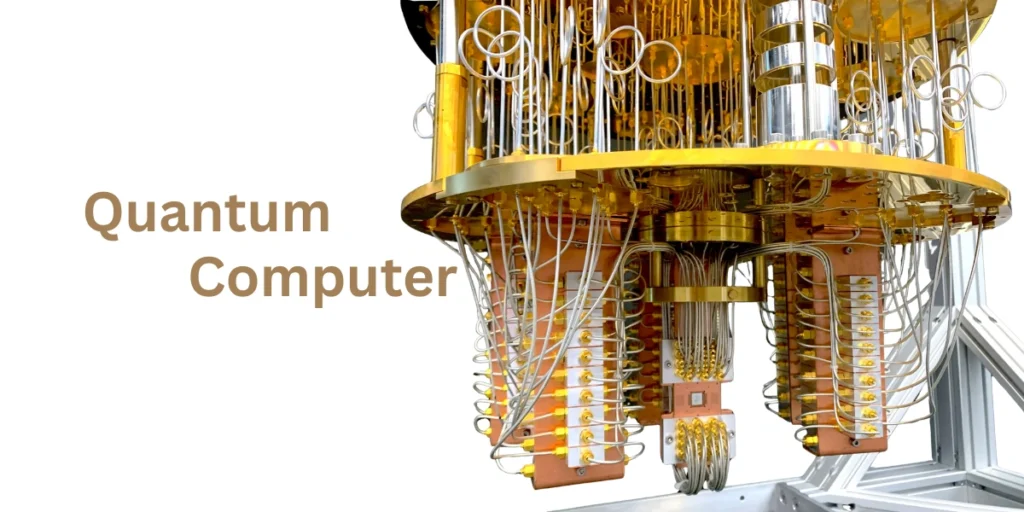
Quantum computers represent one of the most transformative technological shifts since the digital revolution. Unlike your everyday laptop or smartphone that process information using bits (zeros and ones), quantum computers harness the bizarre laws of quantum mechanics to perform calculations at speeds and scales that seem almost impossible with traditional computers. But what exactly do these machines do, and why are tech giants, governments, and corporations investing billions of dollars into developing them? Let’s break down the quantum computing landscape in a way that makes real sense.
1. What Is the Main Purpose of a Quantum Computer?
The primary purpose of a quantum computer is to solve extraordinarily complex problems that would take classical computers impractical amounts of time to tackle. If your regular computer is like a chess player evaluating one move at a time, a quantum computer is like a player who can evaluate millions of possible moves simultaneously.
Here’s the fundamental difference: Traditional computers work with bits, which exist as either 0 or 1. A quantum computer uses qubits (quantum bits), which can exist as 0, 1, or both at the same time—a state called superposition. This unique property allows quantum processors to store and process exponentially larger datasets far faster than even the most powerful classical supercomputers available today.
Think about a practical example. Imagine you’re trying to find the fastest delivery route for a thousand delivery trucks across an entire country. Your regular computer would need to calculate and compare countless routes sequentially, potentially taking weeks or months. A quantum computer could explore billions of possible routes simultaneously and identify the optimal solution in hours or even minutes.
Another critical quantum property called entanglement allows qubits to be interdependent in ways that have no classical equivalent. When qubits become entangled, measuring one instantly influences the others, enabling quantum computers to process information in fundamentally different ways than classical systems. These two properties—superposition and entanglement—are the secret sauce that gives quantum computers their incredible potential.
The transition we’re witnessing is profound. The United Nations has officially designated 2025 as the International Year of Quantum Science and Technology, acknowledging how significant this technology has become for humanity’s future. We’re not talking about incremental improvements; we’re discussing revolutionary computing power that could reshape entire industries.
2. What Can a Quantum Computer Do in Real Life?
The practical applications of quantum computing extend across virtually every major industry you can think of. While the technology is still maturing, real-world implementations are already happening in laboratories and corporate settings worldwide.
Drug Discovery and Pharmaceutical Development
Perhaps the most exciting application is in pharmaceutical research. Traditional drug discovery is phenomenally time-consuming and expensive—it typically takes 10 to 15 years and billions of dollars to bring a new drug to market. Quantum computers can simulate molecular interactions at the atomic level with precision that classical computers simply cannot achieve.
Companies like Qubit Pharmaceuticals are already leveraging quantum computing to accelerate drug discovery. IBM has demonstrated using quantum systems to identify promising drug candidates by calculating molecular properties such as binding affinity (how well a drug attaches to its target), stability, and potential toxicity far more efficiently than classical methods. Biogen, a major pharmaceutical company, worked with Accenture to develop a quantum-enabled application for molecular comparison, proving that quantum computing could deliver results as good as or better than existing methods. This is transformative for patients waiting for life-saving medications.
Financial Services and Risk Analysis
Major financial institutions are racing to implement quantum computing. JPMorgan Chase, Goldman Sachs, and HSBC have all been recognized as top quantum innovators in the finance sector. These banks are using quantum computing for portfolio optimization, risk analysis, and algorithmic trading. JPMorgan recently announced plans to invest up to $10 billion in quantum computing and other strategic technologies. Goldman Sachs partnered with the UK-based startup Quantum Motion to investigate how quantum computing can perform complex financial calculations, including options pricing. The ability to model financial markets more accurately could lead to better trading strategies and more efficient risk management.
Materials Science and Battery Development
Imagine developing superior materials for electric vehicle batteries, solar panels, or advanced aerospace components without having to conduct endless physical experiments. Quantum computers excel at simulating the behavior of atoms and molecules at the quantum level. Mercedes-Benz is already using quantum computing for electric vehicle manufacturing and supply chain optimization. Microsoft is exploring how quantum computing can create better batteries and optimize renewable energy systems. These applications could accelerate the green energy transition and reduce global dependence on fossil fuels.
Logistics and Supply Chain Optimization
Companies like Volkswagen and DHL are experimenting with quantum algorithms to solve critical business problems. Volkswagen is using quantum computing to improve traffic flow for autonomous vehicles, while DHL is optimizing logistics routes. The global logistics industry reports 15-30 percent improvements in route planning and fleet utilization using quantum-inspired methods—improvements that translate directly to reduced operational costs and faster deliveries.
Artificial Intelligence and Machine Learning
Quantum computing could dramatically enhance artificial intelligence capabilities. The ability to process complex datasets and identify patterns at quantum speeds could lead to smarter AI algorithms for everything from healthcare diagnostics to cybersecurity threat detection. Quantum computers could improve the safety of AI systems used in banking, autonomous vehicles, and military applications.
Climate Science and Energy Management
Researchers are using quantum computing to model atmospheric and oceanic processes with higher fidelity, improving climate predictions. Energy companies can use quantum computers to optimize power grids, manage renewable energy integration, and model complex energy distribution systems in real time.
The beautiful reality is that quantum computers aren’t meant to replace your desktop or smartphone. Instead, they’ll work alongside classical computers in hybrid systems, tackling the specific problems where their quantum advantages shine brightest.
3. What Does Elon Musk Say About Quantum Computing?
Elon Musk’s perspective on quantum computing provides a fascinating window into how one of the world’s most influential technological innovators views this emerging field. Unlike some technologies where Musk has been openly dismissive, his stance on quantum computing has evolved from cautious skepticism to active engagement.

Musk holds a physics degree from the University of Pennsylvania, which gives him a genuine understanding of quantum mechanics—though he’s admitted that quantum concepts were among his most challenging subjects as a student. That early struggle has paradoxically sparked a lasting fascination with understanding the fundamental nature of reality itself.
In recent public statements, Musk’s tone has shifted noticeably. In December 2024, he acknowledged that he’d “heard from a few people now that quantum computing is showing real promise.” This marked a notable pivot from his earlier skepticism. But the real turning point came with Google’s quantum breakthrough announcement. When Google announced Willow, its quantum chip showing quantum advantage in molecular interaction algorithms, Musk responded with public congratulations, declaring: “Looks like quantum computing is becoming relevant.” Coming from someone typically critical of competitors’ claims, this represents significant validation of the technology.
What makes Musk’s quantum interest unique is his philosophical dimension. He’s connected quantum computing to his broader worldview, particularly the “simulation hypothesis”—the idea that our reality might be a computational simulation. He’s suggested that quantum phenomena like wave function collapse could represent computational optimization in a simulated universe. If this philosophical framework interests you, it indicates Musk sees quantum computers not just as business tools but as potential instruments for understanding reality’s fundamental nature.
Musk has also explored the convergence of quantum computing and artificial intelligence. He’s discussed how quantum computing could accelerate AI training, improve the security of AI systems, and possibly contribute to the technological singularity he both anticipates and warns about. His perspective on quantum cryptography is particularly noteworthy—he’s mentioned that quantum computers could eventually threaten current cryptographic standards, though he notes that fault-tolerant quantum systems are likely decades away.
Interestingly, Musk has even speculated about quantum computing applications beyond Earth. He’s proposed ideas about lunar quantum computing facilities, suggesting that space environments might offer ideal conditions for quantum processors. Whether Musk launches a dedicated quantum computing venture remains to be seen, but his recent trajectory indicates he’s moved well beyond passive observation into active strategic consideration of the field’s potential.
4. Which Country Has a Quantum Computer?
Quantum computing has become a truly global race, with multiple countries advancing rapidly. However, the distribution of quantum computing development is highly concentrated among a few leading nations with the resources and expertise to support this expensive, complex research.
The United States Dominates
The United States leads globally with an estimated 150 quantum computers as of 2025. This dominance reflects decades of quantum research funding, world-class universities, and major tech companies investing heavily in the field. American companies like IBM, Google, Amazon, and IonQ have developed commercially available quantum systems. Tech giants have established quantum research divisions and cloud-based quantum computing platforms that allow researchers and businesses worldwide to access quantum hardware remotely.
Canada’s Significant Position
Canada ranks second with approximately 20 quantum computers. The country has developed a strong quantum ecosystem supported by government funding and private sector innovation. Canadian companies and institutions have contributed meaningfully to quantum hardware and software development.
China’s Growing Investment
China has an estimated 15 quantum computers and is investing substantially in quantum research as part of its national strategic priorities. The country has established quantum laboratories in partnership with major tech companies like Alibaba. The Alibaba Quantum Computing Laboratory in Shanghai, developed in collaboration with the Chinese Academy of Science, focuses on quantum theory, quantum computing, and quantum artificial intelligence applications.
European Leaders
France, the UK, and Germany are among Europe’s quantum computing leaders. France has committed over $1.8 billion to its National Strategy for Quantum Technologies. The UK hosts the second-largest quantum sector globally with at least 160 active companies. Germany, Austria, and Finland are also making notable contributions through their quantum research initiatives. Under the EuroHPC initiative, European quantum computers are being hosted across six sites in Czech Republic, Germany, Spain, France, Italy, and Poland.
Other Notable Nations
Japan has roughly 2 quantum computers, including systems developed by RIKEN. Australia, while lacking a formal national quantum strategy, has significant R&D initiatives backed by the Australian Research Council with over $94 million in funding. Russia established a Quantum Technologies Roadmap backed by $663 million over five years.
The global quantum computing landscape in 2025 showcases a vibrant ecosystem where the USA maintains clear dominance, but the technology is becoming genuinely worldwide. This international competition actually accelerates progress, as nations recognize quantum computing’s potential impact on national security, economic competitiveness, and scientific advancement.
5. Who Uses Quantum Computers in Real Life?
Quantum computing has moved from theoretical research into real-world application. Understanding who’s actually using these machines today reveals that quantum computing is far more practical than most people realize.
Financial Services Giants
JPMorgan Chase stands out as the most aggressive corporate adopter of quantum computing. The bank has invested in Quantinuum, a leading quantum computing company, and maintains specialist teams dedicated to quantum technologies. JPMorgan has been collaborating with quantum companies since 2020, exploring applications in portfolio optimization and algorithmic trading. Goldman Sachs partnered with Quantum Motion to develop quantum algorithms for financial calculations. HSBC is investigating quantum key distribution for cybersecurity and has signed agreements with Singapore’s central bank to collaborate on quantum security applications.
Pharmaceutical and Biotech Companies
Biogen represents the pharmaceutical industry’s serious commitment to quantum computing. Working with Accenture and 1QBit, Biogen developed quantum-enabled applications for molecular comparison. Qubit Pharmaceuticals actively leverages quantum computing capabilities for drug discovery. These partnerships demonstrate that pharmaceutical companies view quantum computing not as a distant future technology but as a near-term tool to accelerate their R&D processes.
Technology and Computing Companies
IBM, Google, Amazon, and Microsoft are the primary providers of quantum computing hardware and platforms, but they’re also active users themselves. IBM runs the IBM Quantum System One and the newer IBM Quantum System Two, conducting research and collaborating with various enterprises. Google’s Quantum AI division has demonstrated quantum advantage and continues developing practical applications. Amazon Web Services operates AWS Braket, a cloud-based quantum computing service. Microsoft is pursuing its own quantum computing approach with topological qubits while also investing in practical applications like battery development.
Automotive and Manufacturing Enterprises
Volkswagen is using quantum computing to optimize traffic flow and autonomous vehicle systems. Mercedes-Benz applies quantum computing to electric vehicle manufacturing and supply chain optimization. DHL, the global logistics company, experiments with quantum algorithms for route optimization and delivery planning. These applications are showing measurable business value through improved efficiency.
Energy and Chemical Companies
ExxonMobil is advancing quantum computing applications for developing next-generation energy and manufacturing technologies. The company explores quantum chemistry calculations for discovering new materials to capture carbon more efficiently. Major energy companies are investigating quantum optimization for power grid management and renewable energy integration.
Research Institutions and Governments
Universities worldwide have access to quantum computers through cloud services like IBM Quantum Experience and AWS Braket. Government agencies, including the U.S. Department of Energy and NASA, are collaborating with quantum computing companies on research projects. These partnerships signal that quantum computing has achieved sufficient maturity for serious scientific and governmental applications.
The Early Adopter Advantage
Companies using quantum computers today gain significant competitive advantages. Asset management firms were among the earliest adopters, recognizing quantum computing’s potential to revolutionize portfolio optimization and risk analysis. Pharmaceutical companies understand that quantum-accelerated drug discovery could bring life-saving medications to market years faster than traditional methods. Tech companies see quantum computing as essential infrastructure for next-generation artificial intelligence and data analysis.
The reality is that quantum computing adoption is no longer a question of “if” but “when” and “how much.” Organizations across sectors are actively experimenting with quantum technologies, developing proof-of-concept projects, and preparing for the era when quantum-classical hybrid computing becomes standard infrastructure.
Conclusion: Quantum computers represent a fundamental shift in computational capability that will reshape how we solve humanity’s most pressing challenges. From accelerating drug discovery that saves lives to optimizing energy systems that protect our planet, quantum computing’s applications span virtually every industry.
The United States maintains its leadership in quantum computing development, but this is genuinely becoming a global technological race. Elon Musk’s evolution from skeptic to engaged observer reflects broader recognition that quantum computing is moving from theoretical research into practical, measurable applications. Major corporations like JPMorgan Chase, Goldman Sachs, and pharmaceutical companies are already deploying quantum solutions to solve real business problems.
The quantum era isn’t some distant science fiction scenario—it’s happening now. The quantum computers that exist today are advancing rapidly, the applications are becoming increasingly practical, and the investments are reaching historically unprecedented levels. Whether you’re investing in quantum technology, working in an affected industry, or simply curious about humanity’s technological future, understanding quantum computing isn’t optional anymore—it’s essential.
Read also: Quantum Computing the next frontier in information technology