Robotics

Goals of Artificial Intelligence (AI) Research

Goals of Artificial Intelligence (AI) Research

While the general objective of Artificial Intelligence (AI) work is the development of machines which exhibit intelligent behavior, this statement is in itself too broad and ambiguous to be meaningful. The following paragraphs will describe some of the areas of Artificial Intelligence (AI) which are presently being pursued as distinct areas of research. Problem solving

Goals of Artificial Intelligence (AI) Research Read More »

Gripper Sensing Capabilities

Gripper Sensing Capabilities – Industrial Robotics

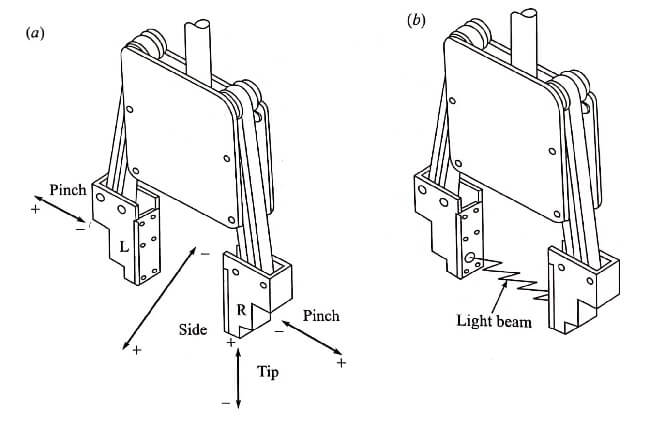
Additional sensing capabilities are available with the optional sensored gripper for the IBM 7565 system. These capabilities include force sensing with strain gauges and optical sensing with a light emitting diode. The gripper is shown in Fig. Indicating the tactile sensing and optical sensing features. Image : Sensored gripper used with IBM 7565 robot system:

Gripper Sensing Capabilities – Industrial Robotics Read More »

Generations of Robot Programming Languages

The textual robot languages possess a variety of structures and capabilities. These languages are still evolving. In this section we identify two generations of textual languages and speculate about what a future generation might be like. First Generation Languages Typical features include the ability to define manipulator motions (using the statements to define the sequence

Generations of Robot Programming Languages Read More »

The Textual Robot Language

The Textual Robot Language – Pedagogy Zone

The first textual robot language was WAVE, developed in 1973 as an experimental language for research at the Stanford Artificial Intelligence Laboratory. Research involving a robot interfaced to a machine vision system was accomplished using the WAVE language. The research demonstrated the feasibility of robot hand-eye coordination. Development of a subsequent language began in 1974

The Textual Robot Language – Pedagogy Zone Read More »