Tap Changing Transformer

Tap Changing Transformer Application in Power System

Tap Changing Transformer All power Tap changing transformer on transmission lines are provided with taps for control of secondary voltage. The tap changing transformers do not control voltage by regulating the flow of reactive VARs but by changing transformation ratio. There are two types of tap changing transformers. (a) Off-load tap changing transformers. (b) On-load

Tap Changing Transformer Application in Power System Read More »

Series Capacitor

Series Capacitor Voltage – Power System Operation and Control

Series Capacitor It is connected in series capacitor to compensate the inductive reactance of line. This reduces the transfer reactance between the buses to which the line is connected. It increases maximum power that can be transmitted and reduces reactive power loss. The reactive power produced by the series capacitor increases with increase in power

Series Capacitor Voltage – Power System Operation and Control Read More »

Strain Gauge Load Cell

Strain Gauge Load Cell – Sensors and Transducers

A load cell is an electromechanical transducer that converts load acting on it into an analog electrical signal. Strain Gauge Load cell provide accurate measurement of compressive and tensile loads. Load cells commonly function by utilizing an internal strain gauge that measure deflection. Because the modulus of elasticity of a load cell is constant the

Strain Gauge Load Cell – Sensors and Transducers Read More »

Computer Control of Power System

Computer Control of Power System – Energy Management

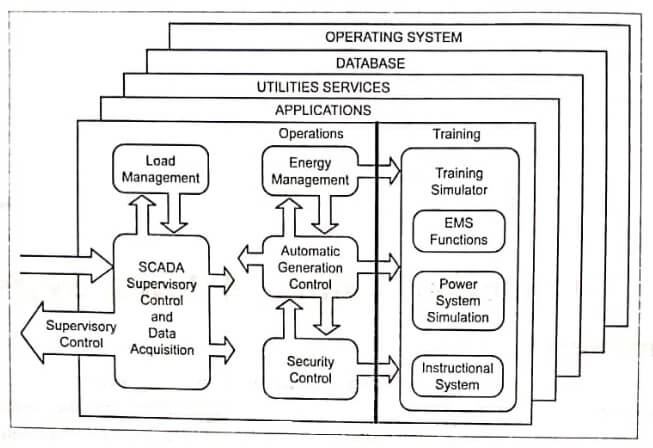
Intro – Computer Control of Power System Operation in plants with automated computer control of power system work mainly in a central control room. In olden plants, the controls for the equipment are not centralized and the switchboard operators control the flow of electricity from a central point, whereas, auxiliary equipment operation work throughout the

Computer Control of Power System – Energy Management Read More »

SCADA

SCADA – Supervisory Control and Data Acquisition

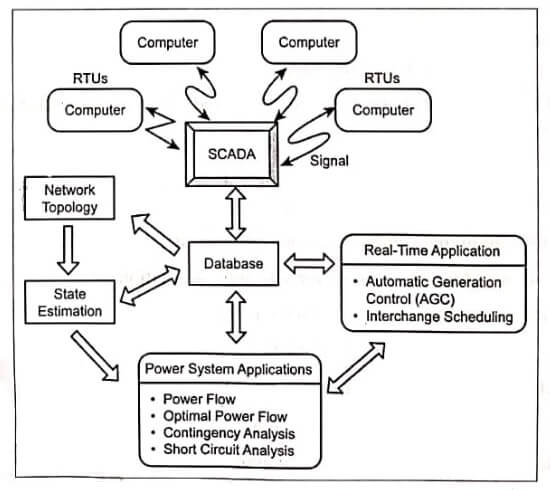
Functions of SCADA (Supervisory Control and Data Acquisition) The supervisory control and data acquisition systems allow a few operators to monitor the generator. The following are the functions of SCADA. 1. Data Acquisition : It provides telemetered measurements and status information to operator. 2. Information display (limit violations, unplanned events). 3. Supervisory control (CBs (Circuit

SCADA – Supervisory Control and Data Acquisition Read More »