Santhakumar Raja

I am the founder of Pedagogy Zone, a dedicated education platform that provides reliable and up-to-date information on academic trends, learning resources, and educational developments.

Classification of Dispersed Systems and Their General Characteristics

The dispersion system is categorised in the following three groups based on the size of dispersed particles: Molecular Dispersion: This system behaves as true solutions where the solute phase is present in the solvent phase. The solute (dispersed phase) is homogeneously distributed as separate molecules of size below 1nm (10-7 cm) throughout the solvent (dispersion

Classification of Dispersed Systems and Their General Characteristics Read More »

Internal View of an Industrial Aerobic Fermenter

Large Scale Production Fermenter Design

Industrial fermenter are either of anaerobic or aerobic classes. Anaerobic fermenters do not require much special equipment, except for the removal of heat generated during the fermentation process; on the contrary, aerobic fermenters require much elaborate equipment for adequate mixing and aeration. The industrial fermentation processes are mostly aerobic, thus a typical aerobic fermenter is

Large Scale Production Fermenter Design Read More »

Purification of MAbs – Pedagogy Zone

The desired antibodies should be extracted from a media sample of cultured hybridomas or a sample of ascites fluid. The contaminants in the cell culture sample consists of growth factors, hormones, and transferrins. The in vivo sample however, contains host antibodies, proteases, nucleases, nucleic acids, and viruses. Other secretions by the hybridomas (like cytokines) may

Purification of MAbs – Pedagogy Zone Read More »

Storage Conditions and Stability of Official Vaccines

Many biological preparation become unstable during storage and thus their safety and efficacy are reduced. Proteins and other macromolecules may be sensitive to heat, light, radiation, and environmental changes, or they may interact with the container materials or other components of the vaccine mixture. Determining these relationships and optimising stability from the time of production

Storage Conditions and Stability of Official Vaccines Read More »

Genetic Organisation of Eukaryotes and Prokaryotes

Genetic Organisation of Eukaryotes and Prokaryotes

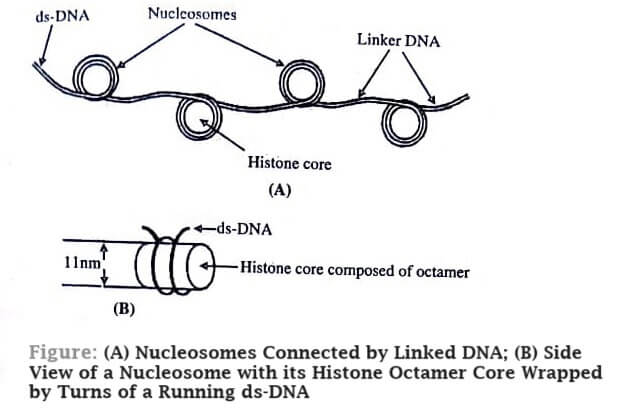
Living organisms are categorised into prokaryotes and eukaryotes based on their cellular features, especially the nature of membrane bound organelles and genetic material organisation. The genetic materials in prokaryotes as well as in eukaryotes are organised into chromosomes. Although the term chromosome is applicable in eukaryotes only, yet the prokaryotic genetic materials are also described

Genetic Organisation of Eukaryotes and Prokaryotes Read More »