Electrical

Tap Changing Transformer Application in Power System

Tap Changing Transformer

Tap Changing Transformer All power Tap changing transformer on transmission lines are provided with taps for control of secondary voltage. The tap changing transformers do not control voltage by regulating the flow of reactive VARs but by changing transformation ratio. There are two types of tap changing transformers. (a) Off-load tap changing transformers. (b) On-load

Tap Changing Transformer Application in Power System Read More »

Series Capacitor Voltage – Power System Operation and Control

Series Capacitor

Series Capacitor It is connected in series capacitor to compensate the inductive reactance of line. This reduces the transfer reactance between the buses to which the line is connected. It increases maximum power that can be transmitted and reduces reactive power loss. The reactive power produced by the series capacitor increases with increase in power

Series Capacitor Voltage – Power System Operation and Control Read More »

Computer Control of Power System – Energy Management

Computer Control of Power System

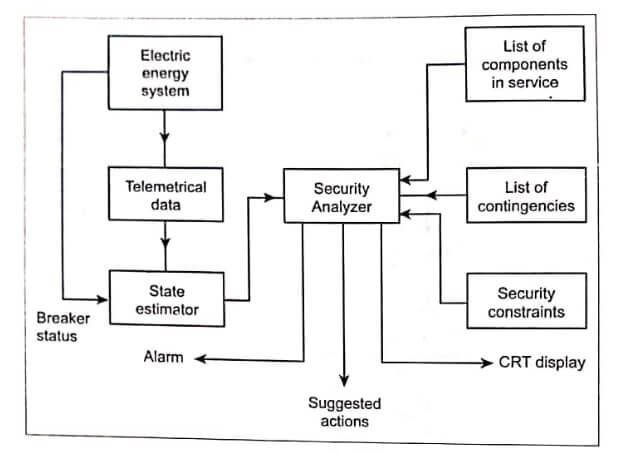
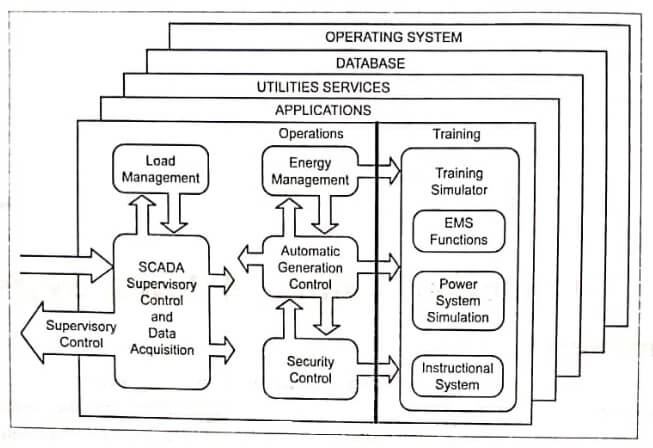
Intro – Computer Control of Power System Operation in plants with automated computer control of power system work mainly in a central control room. In olden plants, the controls for the equipment are not centralized and the switchboard operators control the flow of electricity from a central point, whereas, auxiliary equipment operation work throughout the

Computer Control of Power System – Energy Management Read More »

SCADA – Supervisory Control and Data Acquisition

SCADA

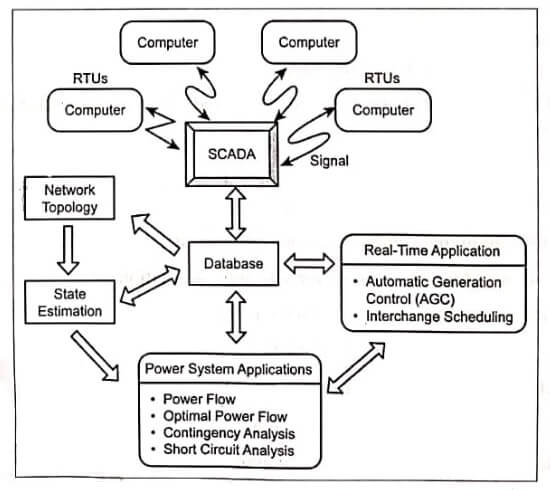
Functions of SCADA (Supervisory Control and Data Acquisition) The supervisory control and data acquisition systems allow a few operators to monitor the generator. The following are the functions of SCADA. 1. Data Acquisition : It provides telemetered measurements and status information to operator. 2. Information display (limit violations, unplanned events). 3. Supervisory control (CBs (Circuit

SCADA – Supervisory Control and Data Acquisition Read More »

Radio Over Fiber Links – Optical Fiber Communications

Radio over fiber

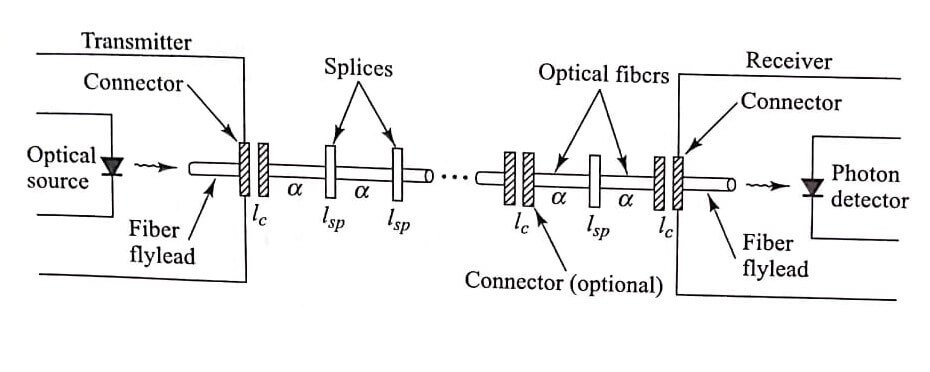
Radio over Fiber Links One application of RF radio over fiber technology is in broadband wireless access networks for interconnecting antenna base stations (BSs) with the central controlling office. Image shows the basic network architecture for such a scheme. Here a collection of antenna base stations provide wireless connectivity to subscribers by means of millimeter-wave

Radio Over Fiber Links – Optical Fiber Communications Read More »

Methods of Voltage Control in Power System

Methods of Voltage Control

Methods of Voltage Control Methods Voltage control level is accomplished by controlling the generation, absorption and reactive power flow at all levels in the system. The following are the methods of voltage control. By excitation control. By static shunt capacitors. By static series capacitors. By static shunt reactors. By synchronous condensers. Other methods for voltage

Methods of Voltage Control in Power System Read More »

Structures for InGaAs APDs – Photodetectors

Structures for InGaAs

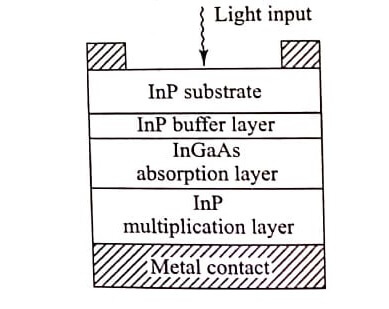
Structures for InGaAs To improve the performance of structures for InGaAs APDs, various complex device architectures have been devised. One widely used structure is the separate-absorption-and-multiplication (SAM) APD configuration. Image shows, this structure uses different materials in the absorption and multiplication regions, with each region being optimized for a particular function. Here, light enters the

Structures for InGaAs APDs – Photodetectors Read More »

Reactive Power and Voltage Control – Power System Operation

Reactive Power and Voltage Control

A power system is said to be well designed if it gives a good quality of reliable supply. Voltage level maintained within reasonable limits is referred as good quality. If reactive power and voltage control variation is more than specified value, the performance of equipment suffers and also the life of equipment is sacrificed. When

Reactive Power and Voltage Control – Power System Operation Read More »