Electrical

Microcontroller – Introduction, Advantages, Features

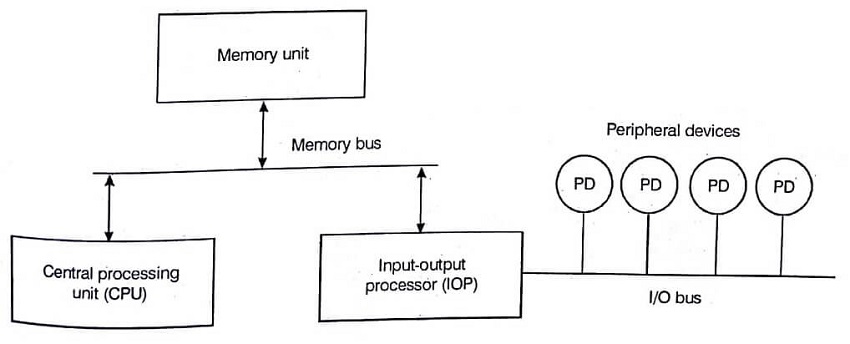
Microcontroller Internal Block Diagram

Microcontrollers as the name suggests, are small controllers. They are like single chip computers that often embedded into other systems to function as processing / controlling unit, microcontrollers are single chip microcomputers. A microcontroller has a CPU (a microprocessor) in addition to a fixed amount of RAM, ROM and I/O parts and a timer on

Microcontroller – Introduction, Advantages, Features Read More »
Superconducting Magnetic Energy Storage – Electrical Energy Storage

Superconducting Magnetic Energy Storage

Superconducting Magnetic Energy Storage – Electricity (dc) can be stored in magnetic fields, wherein the energy stored is proportional to the inductance times the square of the current. An energy storage system based on magnetic would involve an ac-dc-ac converter system (like batteries) and a large coil of a superconductor (a niobium-titanium alloy). To achieve

Superconducting Magnetic Energy Storage – Electrical Energy Storage Read More »

Mechanical Energy Storage – Flywheels, Pumped Storage, Compressed Air

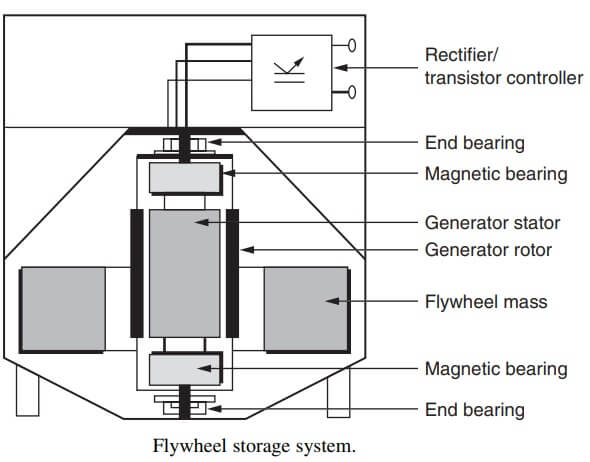
Flywheel storage system

Flywheels : Mechanical energy may be stored in the form of kinetic or potential energy. A flywheel, in essence, is a mechanical battery simply mass rotating about an axis. Although the use of the flywheel as a kinetic energy storage device is well known, it has not, until recently, been considered practical to build flywheels

Mechanical Energy Storage – Flywheels, Pumped Storage, Compressed Air Read More »

Electrochemical Energy Storage – Pedagogy Zone

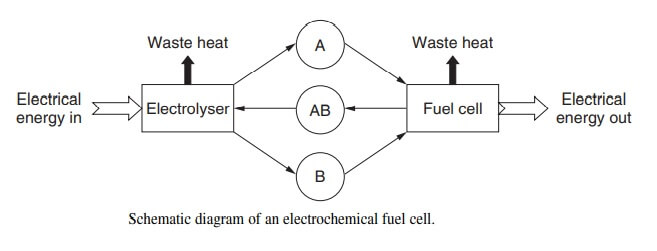
Electrochemical Energy Storage

Batteries : The most traditional of all energy storage for power system is the electrochemical energy storage (EES). The major classification can be made in three categories. They are primary batteries, secondary batteries, and fuel cells. The common feature of these devices is primarily that stored chemical energy is converted into electrical energy. Although the

Electrochemical Energy Storage – Pedagogy Zone Read More »

Automated Feeder Switching Systems – Pedagogy Zone

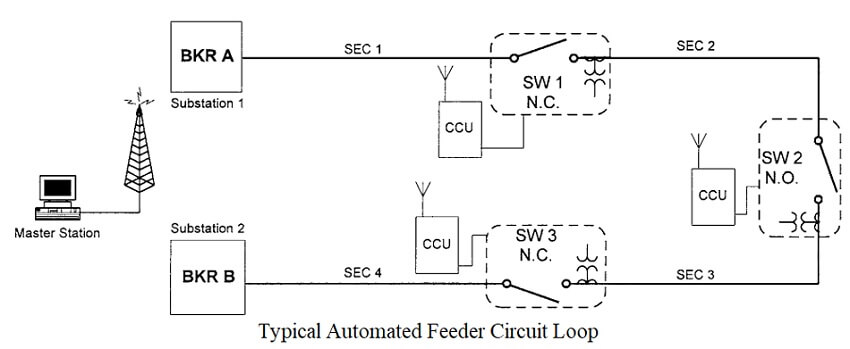
Typical automated feeder circuit loop

The method known as SCADA has long been used to control transmission systems, providing the operational flexibility and speed required for efficient and reliable performance. The use of SCADA in the distribution system is becoming increasingly important as utilities move into a deregulated, competitive environment. The acronym SCADA is being replaced by the generic term

Automated Feeder Switching Systems – Pedagogy Zone Read More »