TCP Connection Establishment

TCP Connection Establishment in Computer Networks

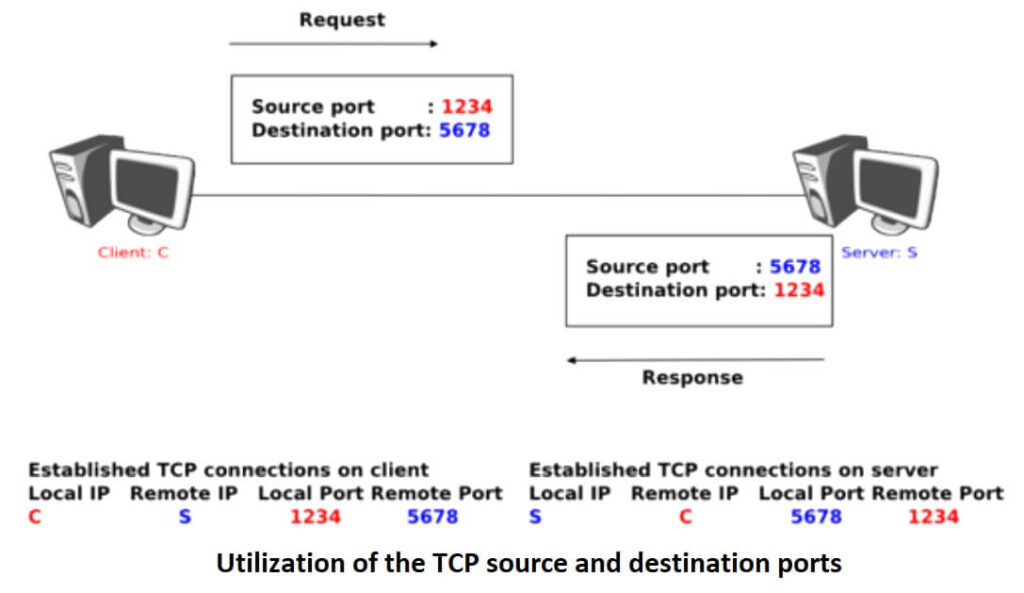
TCP Connection Establishment: A TCP connection is established by using a three-way handshake. The connection establishment phase uses the sequence number, the acknowledgment number and the SYN flag. When a TCP connection is established, the two communicating hosts negotiate the initial sequence number to be used in both directions of the connection. For this, each

TCP Connection Establishment in Computer Networks Read More »

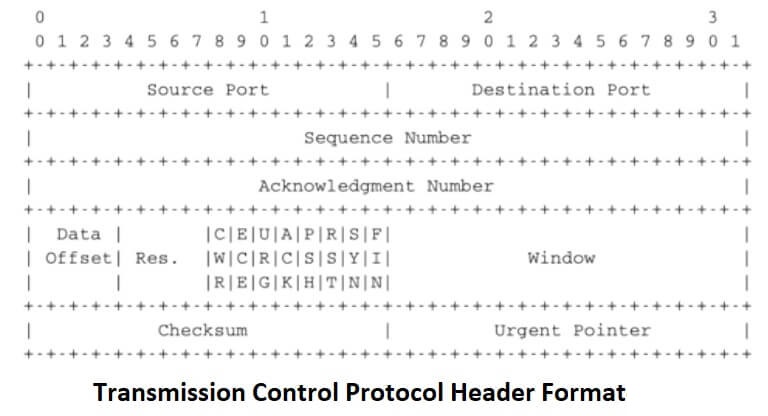
Transmission Control Protocol Header Format

The Transmission Control Protocol (TCP) – Pedagogy Zone

The Transmission Control Protocol (TCP) was initially defined in RFC 793. Several parts of the protocol have been improved since the publication of the original protocol specification. However, the basics of the protocol remain and an implementation that only supports RFC 793 should inter-operate with today’s implementation. TCP provides a reliable bytestream, connection-oriented transport service

The Transmission Control Protocol (TCP) – Pedagogy Zone Read More »

Finite state machine of the simplest transport protocol

Reliable Data Transfer on Top of a Perfect Network Service

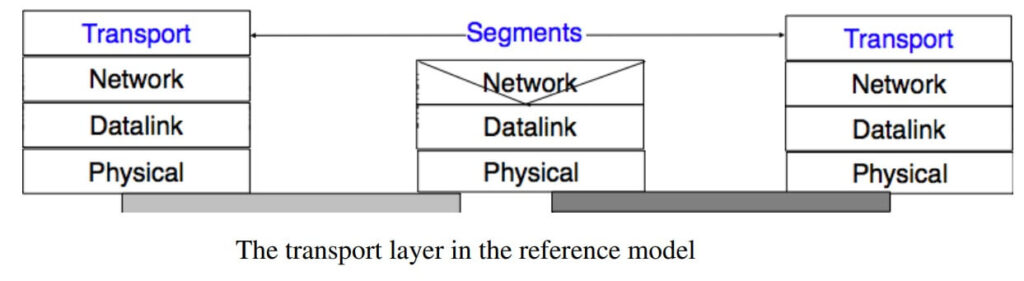
The transport layer entity interacts with both a user in the application layer and an entity in the network layer. According to the reference model, these interactions will be performed using DATA.req and DATA.ind primitives. However, to simplify the presentation and to avoid confusion between a DATA.req primitive issued by the user of the transport

Reliable Data Transfer on Top of a Perfect Network Service Read More »