Open System Interconnection

The Open System Interconnection (OSI) Model

Established in 1947, the International Standards Organization (ISO) is a multinational body dedicated to worldwide agreement on international standards. Almost three-fourths of countries in the world are represented in the ISO. An ISO standard that covers all aspects of network communications is the Open System Interconnection (OSI) model. It was first introduced in the late

The Open System Interconnection (OSI) Model Read More »

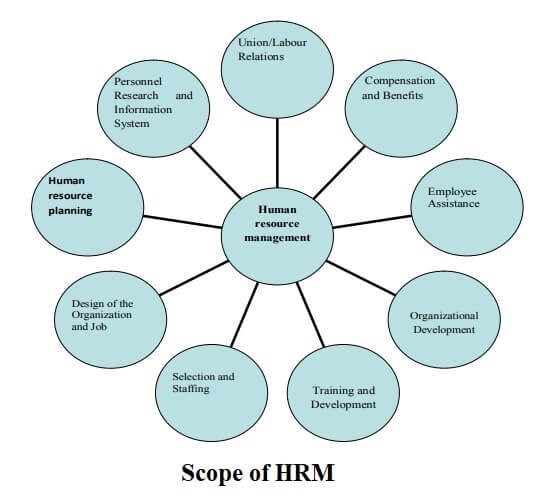
Human Resource Management (HRM)

What is Human Resource Management (HRM)?

[sc_fs_faq html=”true” headline=”h2″ img=”” question=”What is Human Resource Management?” img_alt=”” css_class=””] HRM is the study of activities regarding people working in an organization. It is a managerial function that tries to match an organization’s needs to the skills and abilities of its employees. [/sc_fs_faq] Definitions of Human resources management HRM Human resources management (HRM) is

What is Human Resource Management (HRM)? Read More »

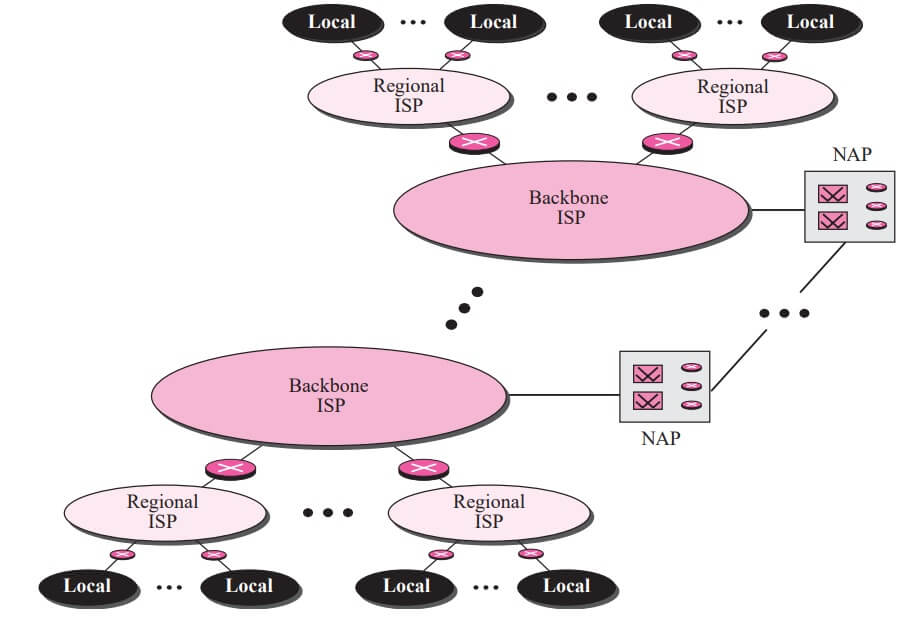
The internet today

Transmission Control Protocol/Internetworking Protocol (TCP/IP)

Cerf and Kahn’s landmark 1973 paper outlined the protocols to achieve end-to-end delivery of data. This was a new version of NCP. This paper on transmission control protocol (TCP) included concepts such as encapsulation, the datagram, and the functions of a gateway. A radical idea was the transfer of responsibility for error correction from the

Transmission Control Protocol/Internetworking Protocol (TCP/IP) Read More »

Glossary for Computer Network – Pedagogy Zone

Terminology in Computer Networking AIMD – Additive Increase, Multiplicative Decrease. A rate adaption algorithm used notably by TCP where a host additively increases its transmission rate when the network is not congested and multiplicatively decreases when congested is detected. anycast – a transmission mode where an information is sent from one source to one receiver

Glossary for Computer Network – Pedagogy Zone Read More »

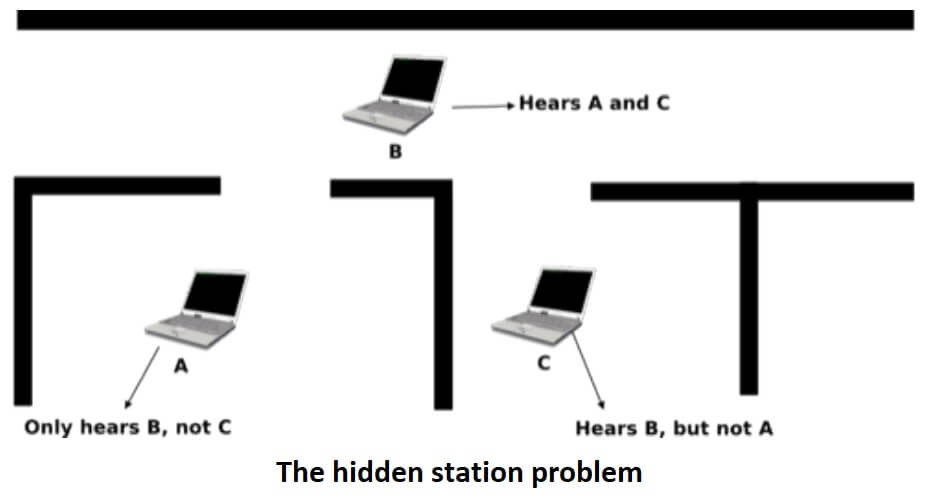
Collision Avoidance

Carrier Sense Multiple Access with Collision Avoidance

The Carrier Sense Multiple Access with Collision Avoidance (CSMA/CA) Medium Access Control algorithm was designed for the popular WiFi wireless network technology. CSMA/CA also senses the transmission channel before transmitting a frame. Furthermore, CSMA/CA tries to avoid collisions by carefully tuning the timers used by CSMA/CA devices. CSMA/CA uses acknowledgements like CSMA. Each frame contains

Carrier Sense Multiple Access with Collision Avoidance Read More »

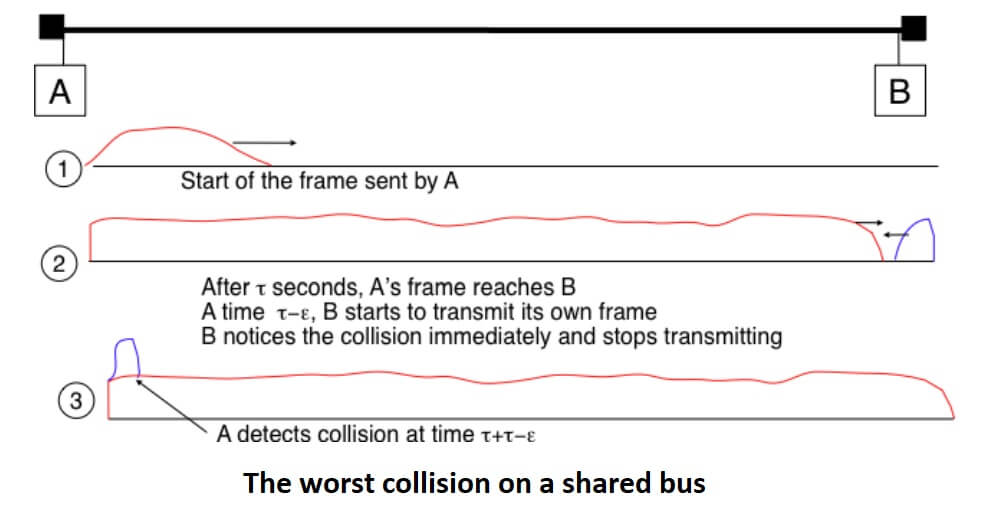
The worst collision on a shared bus

Carrier Sense Multiple Access with Collision Detection

Carrier Sense Multiple Access (CSMA) improves channel utilization compared to ALOHA. However, the performance can still be improved, especially in wired networks. Consider the situation of two terminals that are connected to the same cable. This cable could, for example, be a coaxial cable as in the early days of Ethernet [Metcalfe1976]. It could also

Carrier Sense Multiple Access with Collision Detection Read More »