Defects in Welding

Defects in Welding – Weldability and Testing of Weldments

Defects in Welding Process A welding defect is any flaw that compromises, the usefulness of a weldment. The improper welding parameters, base metal and selection of method introduce defects in the weld metal. So, the defective weld causes failure in service conditions and damages to the properties the defects in weld depending on thickness, load,

Defects in Welding – Weldability and Testing of Weldments Read More »

Inductive Displacement Sensor

Inductive Displacement Sensor – Sensors and Transducers

Inductive displacement sensor      The most widely used variable-inductance displacement transducer in industry is LVDT (Linear Variable Differential Transformer).  It is a passive type sensor. It is an electro-mechanical device designed to produce an AC voltage output proportional to the relative inductive displacement sensor of the transformer and the ferromagnetic core. The physical construction of

Inductive Displacement Sensor – Sensors and Transducers Read More »

Capacitive Displacement Sensors

Capacitive Displacement Sensors Transducers and Sensors

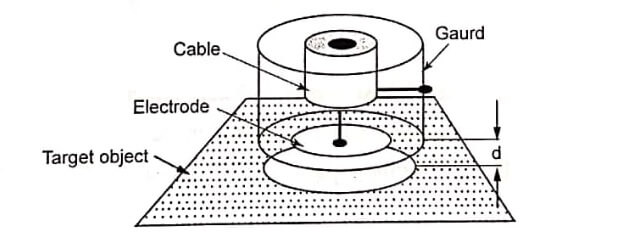
Capacitive Displacement Sensors A transducer that uses capacitance variation can be used to measure displacement. Elastic deflection of a membrane due to the applied force is detected by a capacitance variation.  A highly sensitive displacement and proximity transducers can be constructed because the Capacitive displacement sensors transducer senses very small deflections accurately.  Capacitive sensors can

Capacitive Displacement Sensors Transducers and Sensors Read More »

Performance Terminology

Performance Terminology of Sensors and Transducers

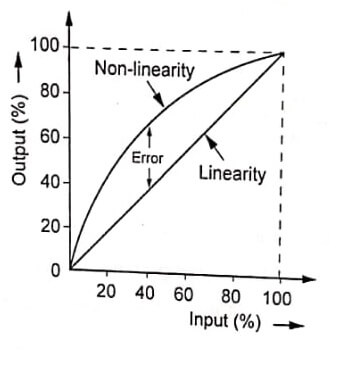
Static characteristics Static characteristic of an instrument are the parameters which are more or less constant or varying very slowly with time. The following characteristics are static characteristics performance terminology. Range : Every sensor is designed to work over a specified range i.e. certain maximum and minimum values. The design ranges are usually fixed and

Performance Terminology of Sensors and Transducers Read More »

Directional Control Valves (DCVs)

Directional Control Valves (DCVs) in Pneumatic System

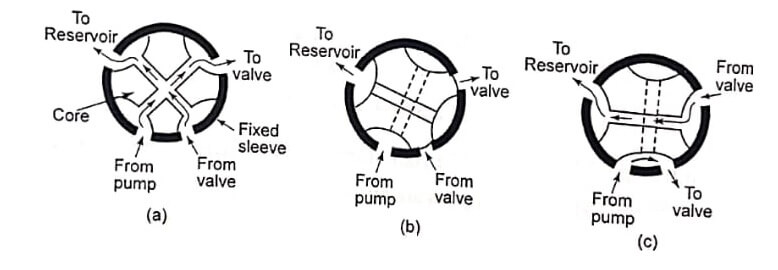
Directional Control Valves (DCVs) The primary function of any control valve is to direct, regulate the flow of fluid and regulate the pressure in various loading devices. Usually, directional control valves are used for sensing, processing, controlling which involves in the following functions. Controlling the flow by guiding and directing It to a loading line.

Directional Control Valves (DCVs) in Pneumatic System Read More »