Electrical engineering

Angle modulation

Comparison Between Amplitude Modulation and Angle Modulation

Angle modulation has following advantages over amplitude modulation (AM): The amplitude of FM is constant. It is independent of depth of modulation. Hence transmitter power remains constant in FM whereas in FM it varies in AM. Since amplitude of FM is constant, the noise interference is minimum in FM. Any noise superimposing an amplitude can

Comparison Between Amplitude Modulation and Angle Modulation Read More »
Hysteresis Motor

Hysteresis Motor – Construction, Operation & Its Applications

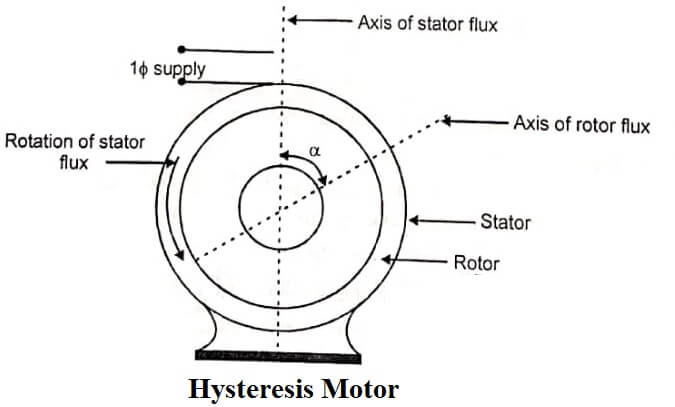
It is a signal phase motor whose operation depends upon the hysteresis (magnetisation produced in a ferromagnetic material lags behind the magnetising force) and on the presence of continuously revolving magnetic flux. Construction A stator designed to produce a synchronously revolving field from a single phase supply. This is accomplished by using permanent split capacitor

Hysteresis Motor – Construction, Operation & Its Applications Read More »

Repulsion Motor

Repulsion Motor Types and Characteristics

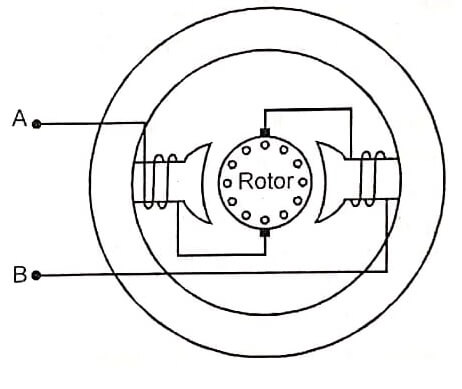
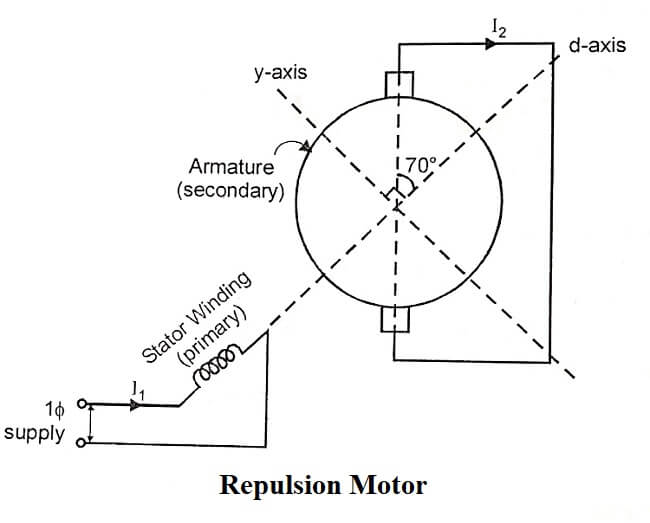
Repulsion motor are similar to series motors except that the rotor and the stator windings are inductively coupled, the rotor current is obtained by transformer action from the stator. Types of Repulsion Motor Two stator winding repulsion motor Compensated repulsion motor. Repulsion start induction motors. Repulsion induction motors. Repulsion Motor Repulsion motors is similar to

Repulsion Motor Types and Characteristics Read More »