Santhakumar Raja

I am the founder of Pedagogy Zone, a dedicated education platform that provides reliable and up-to-date information on academic trends, learning resources, and educational developments.

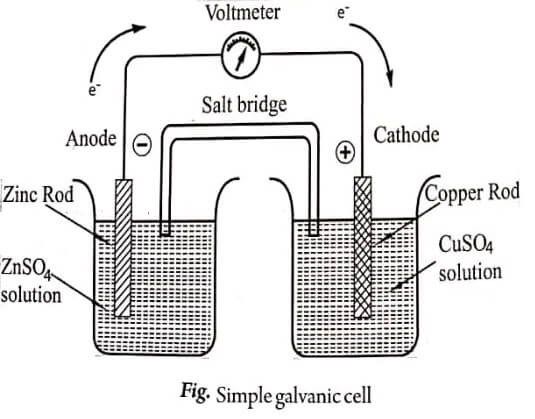
Simple galvanic cell

Definition and Construction of Electrochemical Cell

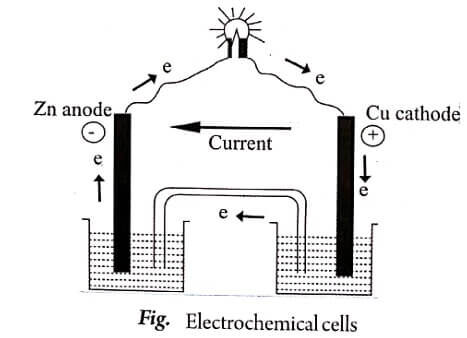
The cells used for electrolysis are called electrolytic cells while those used for generation of electrical energy from chemical reactions are called galvanic or voltaic cells. The practical application of a galvanic cell is Daniel cell. The electrode where oxidation occurs is called anode and the electrode where reduction occurs is called cathode. John Daniell

Definition and Construction of Electrochemical Cell Read More »

Sodium Potassium Pumps

How Do Sodium Potassium Pumps Work

Sodium-potassium pumps, also known as Na+/K+-ATPases, are integral membrane proteins responsible for maintaining the electrochemical gradient across cell membranes. This gradient is vital for numerous cellular functions, including nerve signal transmission, muscle contraction, and nutrient uptake. Structure of Sodium-Potassium Pumps At the structural level, sodium-potassium pumps consist of several subunits, including alpha and beta subunits.

How Do Sodium Potassium Pumps Work Read More »

Electrochemical cells

Difference Between Electrolytic Cells and Electrochemical Cells

A cell is a device for the conversion of electrical energy into chemical change or vice versa. It is a system containing two metallic electrodes, dipped into the same or different electrolytes, connected by an external metallic conductor. Types of cells The cells are classified into two types: Electrolytic cells. Electrochemical cells. Electrolytic cells These

Difference Between Electrolytic Cells and Electrochemical Cells Read More »

Amplitude Modulation

Amplitude Modulation

Mathematical or Time Domain Representation of an AM Equ-1 Modulating signal [latex] \mathrm{V}_m(t)=\mathrm{V}_m \cos \omega_m t [/latex] Equ-2 Carrier signal [latex] \mathrm{V}_c(t)=\mathrm{V}_c \cos \omega_c t [/latex] Where, [latex] \mathrm{V}_c [/latex] – Amplitude of the carrier signal (volts), and [latex] \mathrm{V}_m [/latex] – Amplitude of the modulating signal (volts). The amplitude of the carrier signal is

Amplitude Modulation Read More »