Santhakumar Raja

I am the founder of Pedagogy Zone, a dedicated education platform that provides reliable and up-to-date information on academic trends, learning resources, and educational developments.

Basicity substituted amines

Effect of Substituents on Basicity – Pedagogy Zone

Presence of electron releasing groups on the benzene ring of aromatic amines enhances the electron density on nitrogen, thus increase the basicity. On the contrary, presence of electron withdrawing groups reduces the basicity of amines. Presence of −NO2 group indicates −I and −R effect, thus enhancing the delocalization of lone pair on nitrogen with π-electrons of the benzene ring system

Effect of Substituents on Basicity – Pedagogy Zone Read More »

Napthol Structure

Miscellaneous Compounds – Pedagogy Zone

Some of the phenols discussed below are: Cresols, Resorcinol, and Naphthols. Cresols Cresols (or hydroxytoluene) belonging to the family of methyl phenols have the molecular formula C7H8O. They are aromatic organic compounds which either occur naturally or are manufactured. Cresols are obtained as a mixture of three stereoisomers (molecules having same number and type of

Miscellaneous Compounds – Pedagogy Zone Read More »

Aromatic Character/Aromaticity

Aromatic compounds are organic compounds resembling benzene in their chemical behaviour and possess certain characteristic properties different from those of aliphatic and alicyclic compounds. These characteristic properties are collectively known as aromatic character or aromaticity. Aromatic compounds possess the following important properties: Normally these compounds are cyclic. These compounds have high degree of unsaturation still

Aromatic Character/Aromaticity Read More »

Three Phase Supply

Three Phase Supply

A three-phase supply is generated when three coils are placed 120° apart and the whole rotated in a uniform magnetic field as shown in Fig (a). The result is three independent supplies of equal voltages which are each displaced by 120° from each other as shown in Fig (b). The convention adopted to identify each

Three Phase Supply Read More »

Introduction to Operational Amplifiers

Introduction to Operational Amplifiers

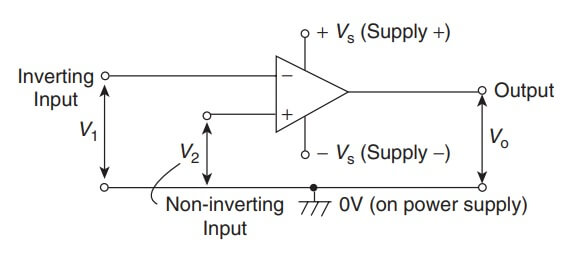
Operational Amplifiers (usually called ‘op amps’) were originally made from discrete components, being designed to solve mathematical equations electronically, by performing operations such as addition and division in analogue computers. Now produced in integrated-circuit (IC) form, op amps have many uses, with one of the most important being as a high-gain d.c. and a.c. voltage

Introduction to Operational Amplifiers Read More »