Typical Prokaryotic Cell

The Prime Features of a Prokaryotic Cell

Examination of a prokaryotic cell reveals various component structures. Some of the structures are naturally common to almost all prokaryotes, but some structures are present in certain species. Structures found external to the bacterial cell wall aid in protection, attachment, motility, or conjugation. Figure shows a typical prokaryotic cell. The prime features of a prokaryotic

The Prime Features of a Prokaryotic Cell Read More »

Drugs Used in Parkinson's Disease

Drugs Used in Parkinson’s Disease – Pedagogy Zone

A slowly progressive and degenerative disease affecting the nervous system is termed Parkinson’s disease (named after its pioneer, James Parkinson in 1817). Parkinson’s disease results from an insufficiency of dopamine in the brain, and is thus categorised as a movement disorder. According to the WHO, a chronic progressive neurodegenerative disorder of insidious onset, characterised by

Drugs Used in Parkinson’s Disease – Pedagogy Zone Read More »

Aqueous Humour Secretion and its Pathway

Drugs Used in Glaucoma and Types of Glaucoma

Glaucoma is defined as a progressive optic neuropathy causing damage to optic nerves that result in visual field defects. The disorder is progressive in nature and is usually associated with increase in intraocular pressure (normal intraocular pressure ranges from 1020mmHg). Therefore, management of glaucoma aims at decreasing the raised intraocular pressure which can be achieved

Drugs Used in Glaucoma and Types of Glaucoma Read More »

Drugs Used in Myasthenia Gravis – Pedagogy Zone

Myasthenia Gravis (MG) is an autoimmune disorder, in which antibodies are produced at neuromuscular junction (NMJ) against the NM receptors, so, it results in decrease in the number of NM receptors. Patients with myasthenia gravis show severe muscular weakness. The degree and intensity may vary at different times. Patients with thymoma show an increased risk of development

Drugs Used in Myasthenia Gravis – Pedagogy Zone Read More »

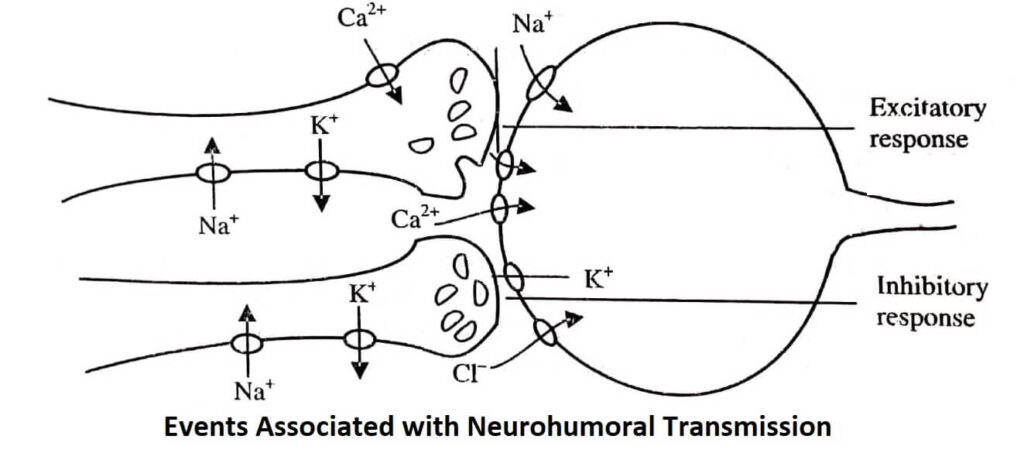
Events Associated with Neurohumoral Transmission

Steps in Neurohumoral Transmission – Pedagogy Zone

Neurohumoral transmission involves the following four steps (figure) Step 1: Initiation of an Action Potential and Axonal Conduction During resting conditions, the membrane potential inside a typical axon is −70mV with respect to exterior of axon. A high concentration of K+ and low levels of Na+ and Cl– (K+ 140mM, Na+ 10- 15mM ) within the cell cause this difference in

Steps in Neurohumoral Transmission – Pedagogy Zone Read More »

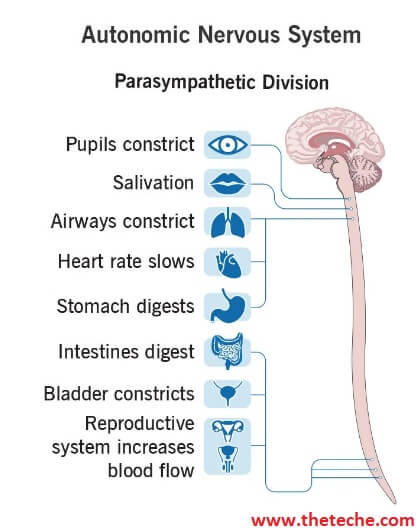
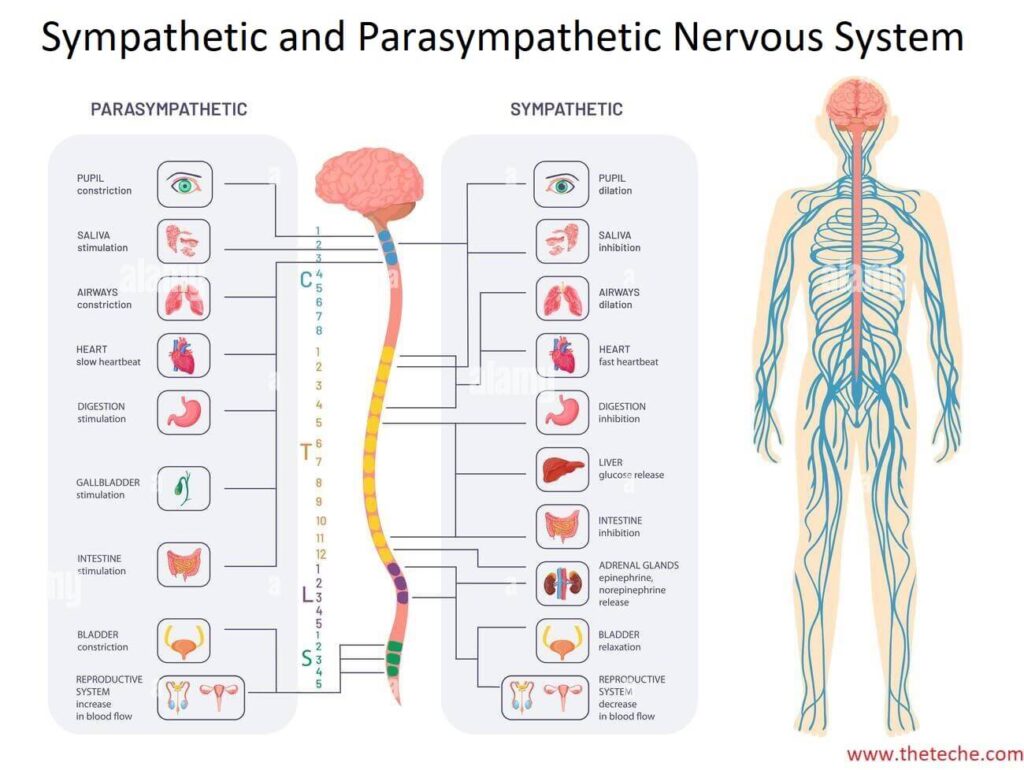
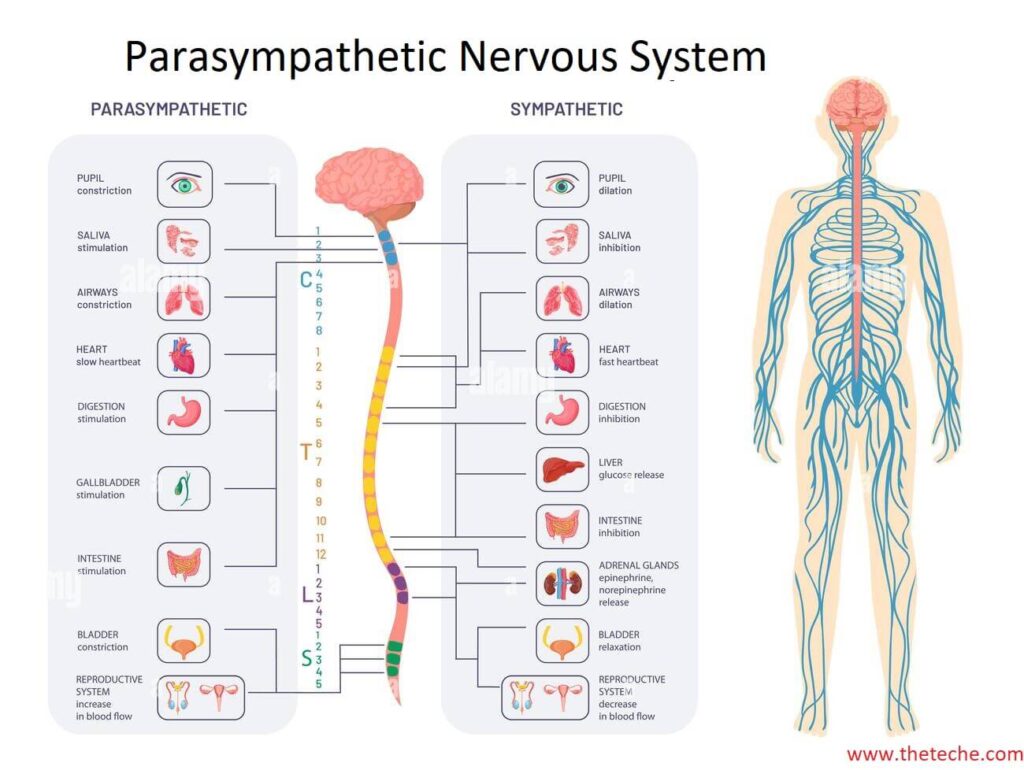
Difference Between Sympathetic and Parasympathetic Nervous System

Difference Between Sympathetic & Parasympathetic Nervous System

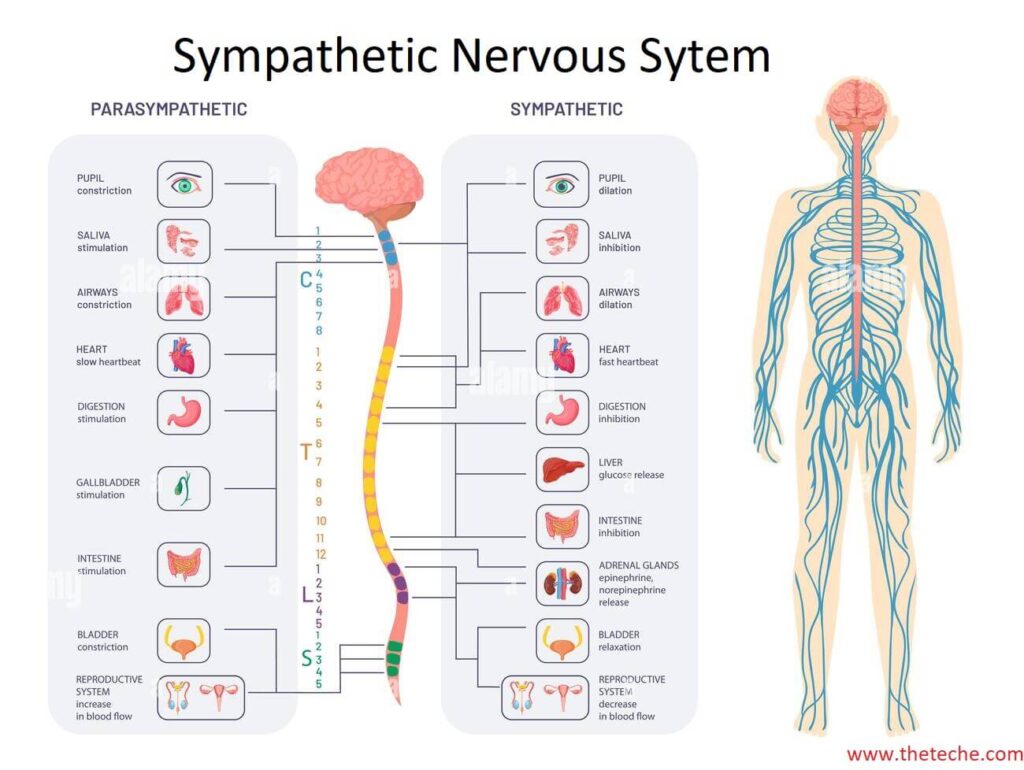
The differences between sympathetic and parasympathetic nervous system according to their origin, character and effect on respective organs are listed in table. Sympathetic Parasympathetic Origin From all thoracic and upper 3 lumbar segments. From cranial 3, 7, 9, 10 and sacral 2, 3, 4 segments. Character Short preganglionic and long post-ganglionic fibres. Long preganglionic and

Difference Between Sympathetic & Parasympathetic Nervous System Read More »