Three Phase Supply

Three Phase Supply

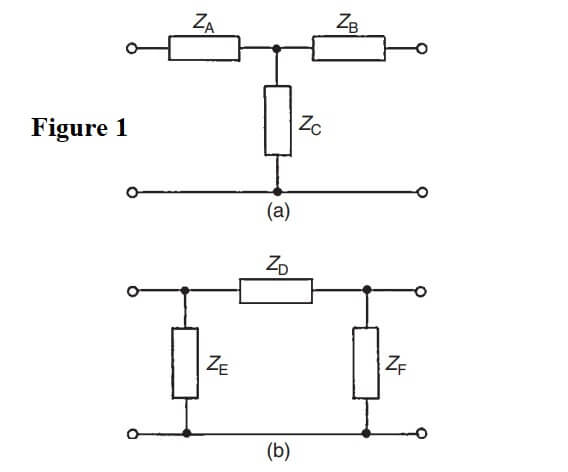
A three-phase supply is generated when three coils are placed 120° apart and the whole rotated in a uniform magnetic field as shown in Fig (a). The result is three independent supplies of equal voltages which are each displaced by 120° from each other as shown in Fig (b). The convention adopted to identify each

Three Phase Supply Read More »
Introduction to Operational Amplifiers

Introduction to Operational Amplifiers

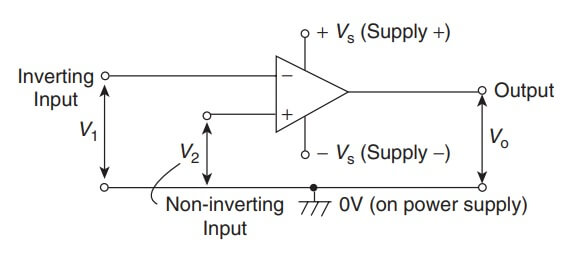
Operational Amplifiers (usually called ‘op amps’) were originally made from discrete components, being designed to solve mathematical equations electronically, by performing operations such as addition and division in analogue computers. Now produced in integrated-circuit (IC) form, op amps have many uses, with one of the most important being as a high-gain d.c. and a.c. voltage

Introduction to Operational Amplifiers Read More »

Typical BJT Characteristics and Maximum Ratings

Typical BJT Characteristics and Maximum Ratings

Table summarises the characteristics of some typical bipolar junction transistors for different applications, where IC max is the maximum collector current, VCE  max is the maximum collector – mitter voltage, PTOT max is the maximum device power dissipation, and hfe is the typical value of common-emitter current gain. Transistor characteristics and maximum ratings Device Type IC max

Typical BJT Characteristics and Maximum Ratings Read More »

Bipolar Junction Transistors (BJT)

Bipolar junction transistors generally comprise n-p-n or p-n-p junctions of either silicon (Si) or germanium (Ge) material. The junctions are, in fact, produced in a single slice of silicon by diffusing impurities through a photographically reduced mask. Silicon transistors are superior when compared with germanium transistors in the vast majority of applications (particularly at high

Bipolar Junction Transistors (BJT) Read More »