Mechanical

Exhaust Gas Recirculation

Exhaust Gas Recirculation (EGR) System – Pedagogy Zone

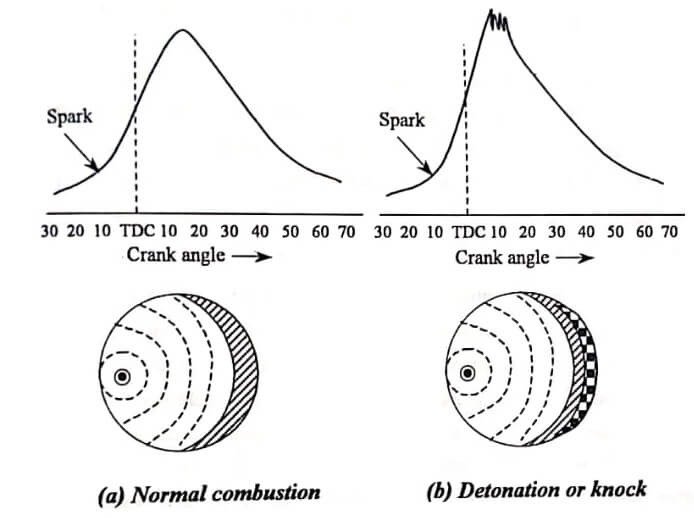
Excessive nitrogen oxides (NO2) form when peak combustion temperature exceeds 1950°C. To lower the combustion temperature, many engines have EGR system. It recirculates about 10% of the inert gas back into the intake manifold The cooler exhaust gas absorbs heat from the much hotter combustion process. It reduces peak combustion temperature and lowers the formation

Exhaust Gas Recirculation (EGR) System – Pedagogy Zone Read More »

Coal Cleaning Equipment

Coal Cleaning Equipment – Fuel and Ash Handling

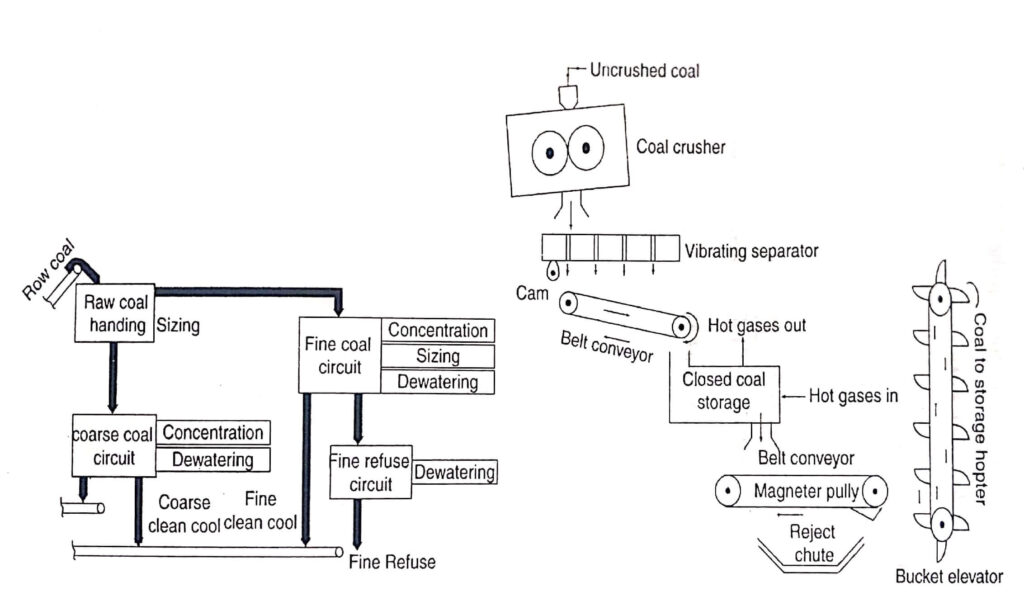
The coal preparation includes sizing, removal of rock originating from mine roof, removal of ash forming and sulphur bearing minerals, drying to remove excessive surface moisture and blending of different coals to achieve desired physical and chemical properties. The fig. shows the flow diagram of coal preparation plants. The coal cleaning equipment is relied on

Coal Cleaning Equipment – Fuel and Ash Handling Read More »

Definition of Metrology - Linear and Angular Measurement

Definition of Metrology – Linear and Angular Measurement

Definition of metrology is a “Science of measurement”. The most important parameter in metrology is the length. Metrology is divided into Industrial Metrology and Medical Metrology under consideration of its application and may be divided into metrology of length and Metrology of time under consideration of its quantity. Definition of Metrology is mainly concerned with

Definition of Metrology – Linear and Angular Measurement Read More »

What is Static Force Analysis

What is Static Force Analysis – Dynamic Force Analysis

In this chapter, we shall discuss the static and dynamic force analysis of planar mechanisms in detail. In our studies of “Kinematics of Machinery“, we limited ourselves to consideration of the geometry of the motions and of the relationships between displacement and time. But the force required to produce those motions were not considered. In

What is Static Force Analysis – Dynamic Force Analysis Read More »

Theory of Machines

Theory of Machines and Branches – Dynamics of Machinery

The subject ‘Theory of Machines’, also known as ‘Mechanics of Machines’, comprises: (i) the study of the relative motion between the parts of a machine, and (ii) the study of the forces which act on those parts. It is understood that most mechanical engineering activities revolve around a mechanical system whose function depends on the

Theory of Machines and Branches – Dynamics of Machinery Read More »