August 2023

Cellular/Cell-Mediated/T-Cell Immunity

Cell-mediated immunity is an immune response that does not involve antibodies or complement, but rather involves the activation of macrophages, natural killer cells, antigen-specific cytotoxic T-lymphocytes, and the release of various cytokines in response to an antigen. Historically, the immune system was separated into two branches, cellular immunity; for which the protective function of immunisation

Cellular/Cell-Mediated/T-Cell Immunity Read More »
Application of rDNA Technology and Genetic Engineering the Production of Insulin

Human insulin was the first recombinant-derived product. It is used for the treatment of diabetes. Fredrick Sanger and his co-worker identified the insulin structure stating that it is made up of two polypeptide chains of A and B with a total 51 amino acid units (21 in A-chain and 30 in B-chain) held by disulphide

Application of rDNA Technology and Genetic Engineering the Production of Insulin Read More »

Application of rDNA Technology and Genetic Engineering in the Production of Interferon

Interferons are low molecular weight proteins produced by virus infected cells, which in non-infected cells can induce the formation of a second protein. This protein has the ability to prevent transcription of any viral mRNA produced in that cell. Interferons exhibit antiviral activity, anti-proliferative activity, and many effects on the immune system. Interferons on the

Application of rDNA Technology and Genetic Engineering in the Production of Interferon Read More »

Applications of rDNA Technology and Genetic Engineering in Medicine

Genetic engineering has an important role to play in the production of medicines. Microorganisms and plant-based substances are used for producing various drugs, vaccines, enzymes, and hormones at low costs. Genetic engineering involves the study of inheritance pattern of diseases in man and collection of human genes that provide a complete map for inheritance of

Applications of rDNA Technology and Genetic Engineering in Medicine Read More »

Techniques Used in Recombinant DNA Technology

In recombinant DNA technology, many different techniques are used to achieve different requirements or to obtain proper information so that an exact inference can be drawn out during genetic engineering. Gel electrophoresis, blotting techniques, bot-blot hybridisation, DNA sequencing, artificial gene synthesis, polymerase chain reaction, colony hybridisation, are some of the important techniques used. Gel Electrophoresis

Techniques Used in Recombinant DNA Technology Read More »

Expression of Cloned Gene Within the Host

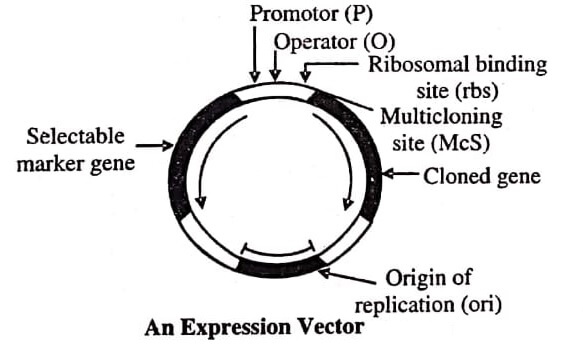
To express a cloned gene (for a desired product) in a transformed cell means that it has to transcript and translate. Sometimes functional proteins are produced by post-translation modifications. Protein synthesis is based on the encoded information in the sequence of the DNA strand bases. Structural gene directs the cells machinery for sequential linear arrangements

Expression of Cloned Gene Within the Host Read More »

Colony Hybridisation (or Nucleic Acid Hybridisation) by Replica Plate Method

The replica plate method is used in genetic engineering for identifying transformed bacterial cells (cells containing foreign DNA). Only some of the cells transformed with a specific DNA may actually have foreign DNA. Thus, it is essential to screen those cells having foreign DNA by the technique of colony hybridisation (only for bacterial cells) figure.

Colony Hybridisation (or Nucleic Acid Hybridisation) by Replica Plate Method Read More »