August 2023

Protein Engineering

The process of developing proteins having desired functions by manipulating their stability and specificity is termed protein engineering. This can be done by taking two main approaches, rational design and irrational design (or directed evolution). In the former case, knowledge of the protein structure and function is considered and a rational gene mutation is planned.

Protein Engineering Read More »

Manufacturing RNA Using GMOs

Genetic Engineering

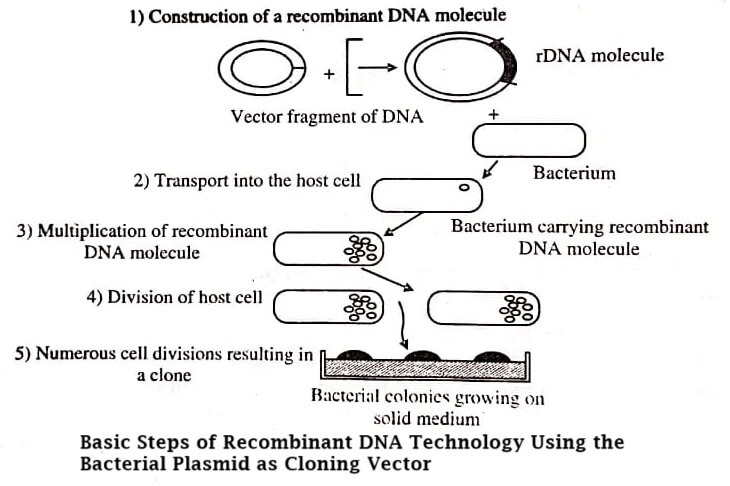
Genetic engineering involves deliberate DNA manipulation in organisms to alter their genes. Although the organisms whose genes are being altered may not be microbes, but the substances and techniques involved are obtained from microbes and adapted for use in more complex organisms. Historical Background The term genetic engineering initially was used for various techniques used

Genetic Engineering Read More »

Increasing the Stability and Biological Activity of Proteins

The industrial applications or therapeutic uses of enzymes/proteins can be appropriately brought into use by increasing their half-lives or thermostability. Proteins with enhanced stability can be obtained by the following methods: Addition of disulfide bonds, Changing asparagine to other amino acids, Reducing the free sulfhydryl groups, Single amino acid changes, and Improving kinetic properties of

Increasing the Stability and Biological Activity of Proteins Read More »

Sachse Mohrs Theory

Sachse Mohr’s Theory (Theory of Strainless Rings)

Baeyer’s strain theory successfully explained the relative stability of cyclic compounds having 6-membered rings (or more appropriately having 5-membered rings), but it failed to explain the stability of higher compounds. Since the valency deviation (d) of seven, eight. etc., membered rings is significantly high, these compounds should also be unstable; but the stability of these

Sachse Mohr’s Theory (Theory of Strainless Rings) Read More »

Basicity substituted amines

Effect of Substituents on Basicity – Pedagogy Zone

Presence of electron releasing groups on the benzene ring of aromatic amines enhances the electron density on nitrogen, thus increase the basicity. On the contrary, presence of electron withdrawing groups reduces the basicity of amines. Presence of −NO2 group indicates −I and −R effect, thus enhancing the delocalization of lone pair on nitrogen with π-electrons of the benzene ring system

Effect of Substituents on Basicity – Pedagogy Zone Read More »