Santhakumar Raja

I am the founder of Pedagogy Zone, a dedicated education platform that provides reliable and up-to-date information on academic trends, learning resources, and educational developments.

Type II superconductors

Types of Superconductors – Pedagogy Zone

Based on the value of superconducting transition temperature, superconductors are divided into two categories: (i) Low temperature superconductors (ii) High temperature superconductors S.No Low Temperature superconductor High Temperature superconductor 1. Superconductors having low superconducting transition temperature (<20 K). Superconductors having high superconducting transition (>100 K). 2. Due to the formation of superconductivity from holes, it

Types of Superconductors – Pedagogy Zone Read More »
Factors that Affect the Superconducting Property

Impurities : When the impurities are added to superconducting material, the properties can be changed abruptly. In particular the magnetic properties can be changed. Size : If the size is reduced below 100μm the superconducting properties such as magnetic permeability is no longer zero and critical magnetic field (Hc) increases than bulk material. Frequency :

Factors that Affect the Superconducting Property Read More »

Stereospecific Reaction

Stereospecific and Stereoselective Reactions

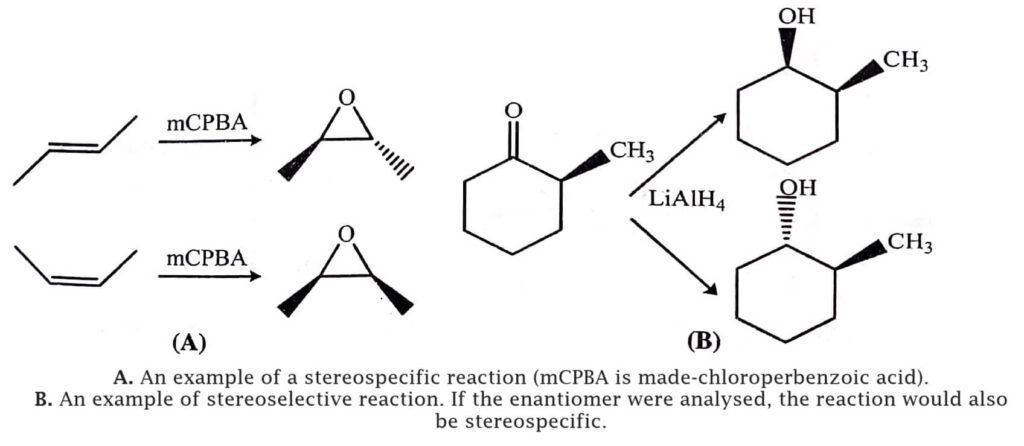
In stereospecific reactions, one stereoisomer of the product is obtained if one stereoisomer of the reactant is present, while different stereoisomers of product are obtained when different stereoisomer of the reactant are present. Thus for determining whether a reaction is stereospecific or not, one has to analyse the product ratio from the different stereoisomer of

Stereospecific and Stereoselective Reactions Read More »

Conformational Isomerism – Pedagogy Zone

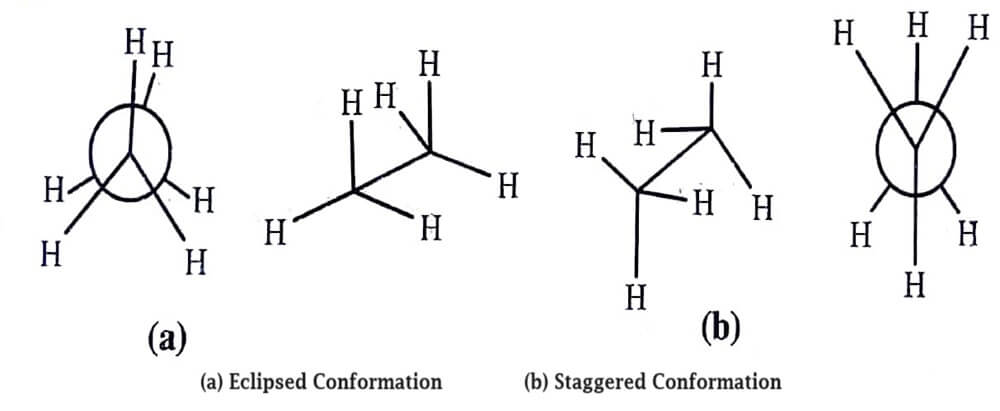
Conformational isomerism: Isomers resulting from different arrangements of the atoms in space due to the rotation of groups around C-C bond axis are known as conformational isomers. The study of these confirmations or conformational isomers is known as conformational analysis which involves analysis of the shapes that molecules can adopt by rotation about single bond.

Conformational Isomerism – Pedagogy Zone Read More »

Ferromagnetic Materials 2

Classification of Ferromagnetic Materials

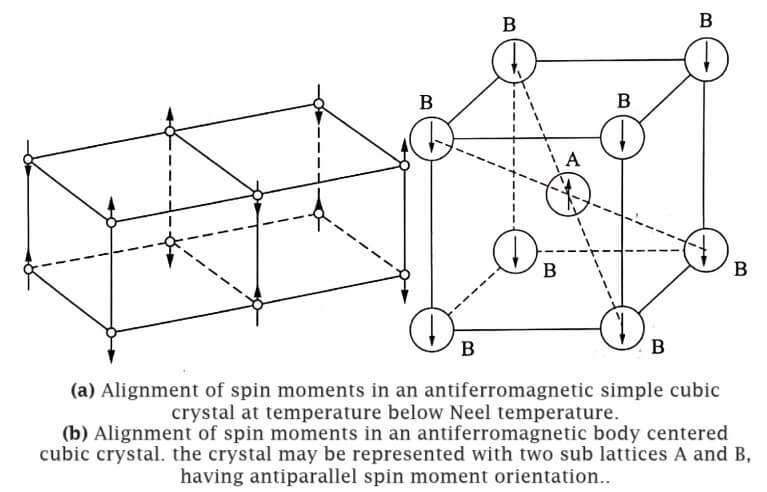
Based on permanent magnetic dipoles, materials are further classified into Antiferromagnetic materials Ferrimagnetic materials Antiferromagnetic materials Definition: When the magnitudes of all the antiparallel aligned magnetic dipoles of a material are equal and the resultant magnetisation becomes zero, the material is called antiferromagnetic material. Examples: Manganese oxide (MnO), Chromium oxide (Cr2O3), Ferrous oxide (FeO), etc. This is

Classification of Ferromagnetic Materials Read More »