Communications

Series Capacitor

Series Capacitor Voltage – Power System Operation and Control

Series Capacitor It is connected in series capacitor to compensate the inductive reactance of line. This reduces the transfer reactance between the buses to which the line is connected. It increases maximum power that can be transmitted and reduces reactive power loss. The reactive power produced by the series capacitor increases with increase in power

Series Capacitor Voltage – Power System Operation and Control Read More »
Analog Link

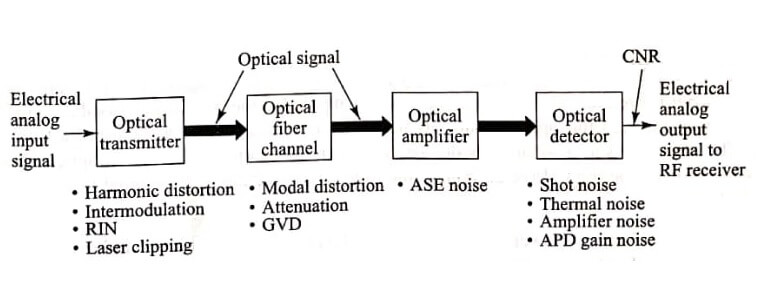
Analog Link in Optical Communication

Analog Link In telecommunication networks the trend has been to analog link telephone exchanges with digital circuits. A major reason for this was the introduction of digital integrated-circuit technology which offered a reliable and economic method of transmitting both voice and data signals. Since the initial applications of fiber optics were to telecommunication networks, its

Analog Link in Optical Communication Read More »

Methods of Voltage Control

Methods of Voltage Control in Power System

Methods of Voltage Control Methods Voltage control level is accomplished by controlling the generation, absorption and reactive power flow at all levels in the system. The following are the methods of voltage control. By excitation control. By static shunt capacitors. By static series capacitors. By static shunt reactors. By synchronous condensers. Other methods for voltage

Methods of Voltage Control in Power System Read More »

Optical Fiber Connectors

Optical Fiber Connectors – Optical Fiber Communications

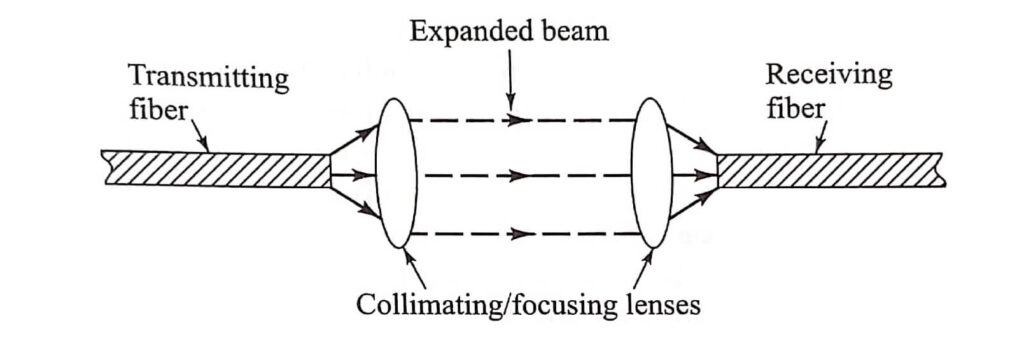
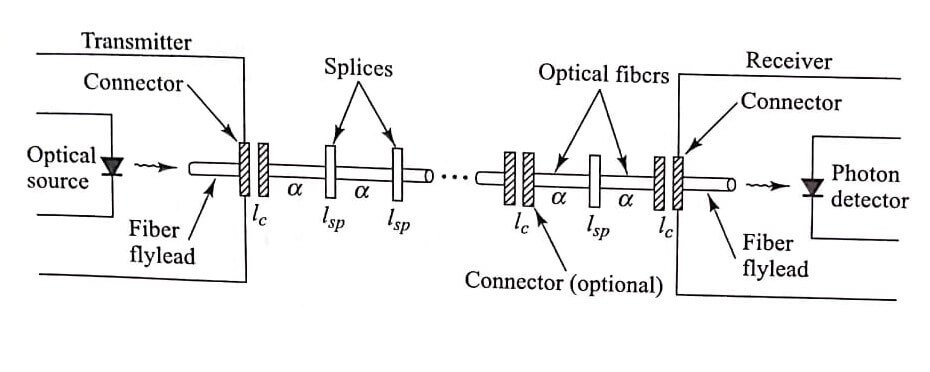
Optical Fiber Connectors A wide variety of optical fiber connectors has evolved for range numerous different applications. Their uses from simple single channel fiber to fiber connectors in a benign location to multichannel connectors used in harsh military field environments. Some of the principal requirements of a good connector design are as follows: Low coupling

Optical Fiber Connectors – Optical Fiber Communications Read More »

WDM Wavelength Division Multiplexing

WDM Wavelength Division Multiplexing Concepts and Components

WDM – Wavelength Division Multiplexing A distinctive operational feature of an (WDM wavelength division multiplexing) optical fiber is that there is a wide spectral region in which optical signals can be transmitted efficiently. For full- spectrum fibers this region includes the O-band through the L-band, which ranges from about 1260 to 1675 nm. Since the

WDM Wavelength Division Multiplexing Concepts and Components Read More »

Optical Receiver Operation

Optical Receiver Operation – Fiber Communications

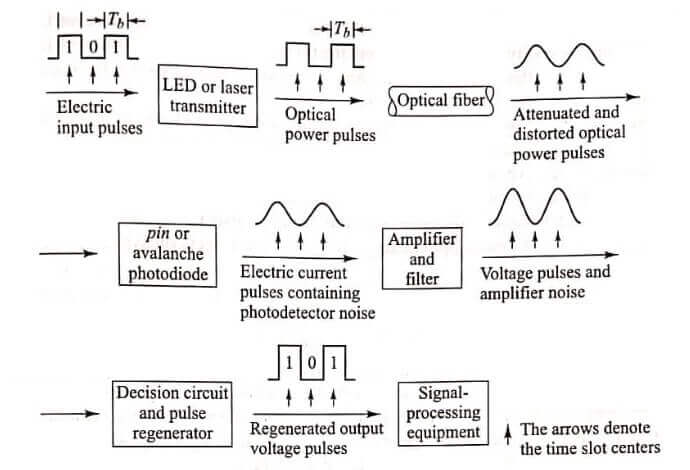
Optical Receiver Operation Having discussed the characteristics and operation of photodetectors in the previous chapter, we now turn our attention to the optical receiver operation. An optical receiver consists of a photodetector, an amplifier, and signal processing circuitry. The receiver has the task of first converting the optical energy emerging from the end of a

Optical Receiver Operation – Fiber Communications Read More »