Santhakumar Raja

I am the founder of Pedagogy Zone, a dedicated education platform that provides reliable and up-to-date information on academic trends, learning resources, and educational developments.

Methods of Prevention of Contamination

Methods of Prevention of Contamination – Pedagogy Zone

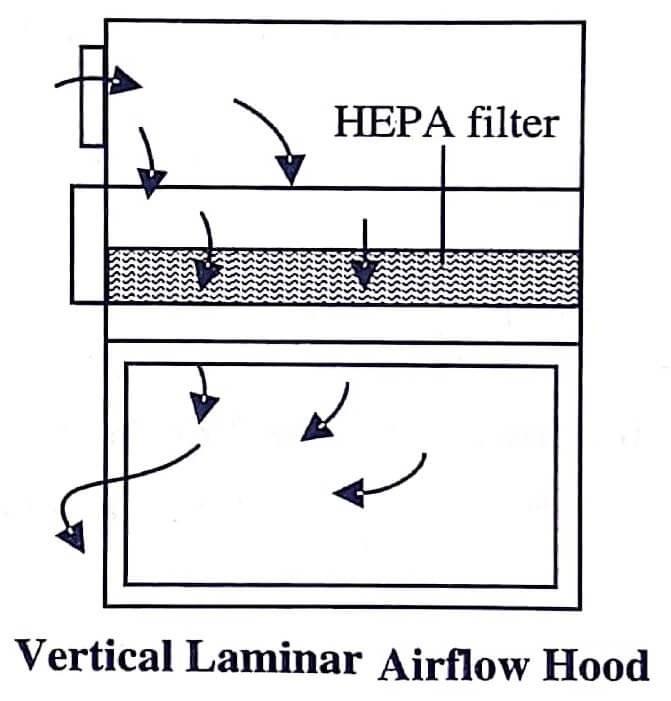
The steps by which microbial contamination of products can be prevented in aseptic areas are discussed below: Personnel : They can take the following measures: Access to production areas by the unauthorised personnel should be restricted, and only trained ones should be allowed to enter. Adequate personnel hygiene should be maintained. The personnel should be

Methods of Prevention of Contamination – Pedagogy Zone Read More »

Different Sources of Contamination in an Aseptic Area

Different Sources of Contamination in an Aseptic Area

There are various contamination sources in an aseptic area, which are discussed below: Personnel : Those supervising, performing, or controlling drug manufacturing are a potential source of microbial contamination, due to the following reasons: Inadequate training, Direct contact between the hands and starting materials, primary packing materials, and intermediate or bulk products, Improper hygiene, Unauthorised

Different Sources of Contamination in an Aseptic Area Read More »

Direct Inoculation (or Direct Inoculation of Culture Media)

Direct Inoculation (or Direct Inoculation of Culture Media)

Following three culture media are commonly used to perform the tests for sterility: Nutrient Broth : This medium is used for aerobic microorganisms and have the following features: The value of redox potential (Eh) of this medium is too high to allow the growth of anaerobes. The culture medium, such as soyabean casein digest broth, Hartley’s

Direct Inoculation (or Direct Inoculation of Culture Media) Read More »

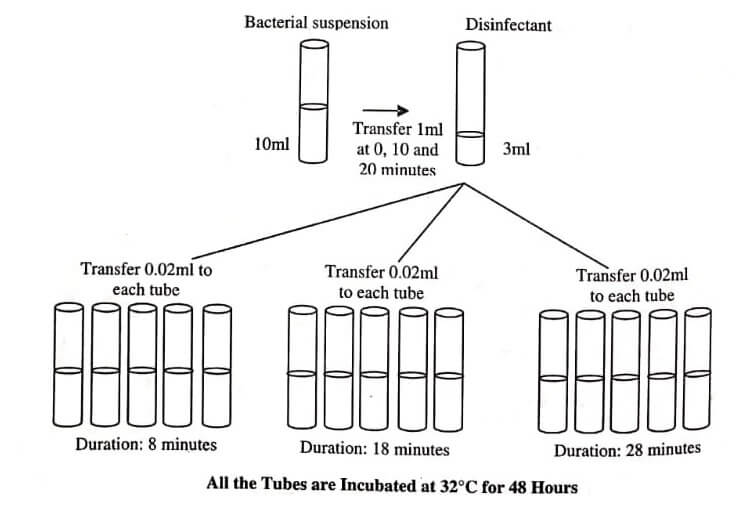
All the Tubes are Incubated at 32C for 48 Hours

Evaluation for Bacteriostatic and Bactericidal Actions

For the evaluation of efficiency, potency, and reactivity of disinfectants following techniques are used: Tube dilution and agar plate method, Cup-plate, filter paper, and cylinder plate method, Ditch-plate or giant colony method, Kelsey-Sykes test, In-use dilution test, Phenol coefficient test – Rideal-Walker test, and Chick-Martin test. Tube Dilution and Agar Plate Method The chemical disinfecting

Evaluation for Bacteriostatic and Bactericidal Actions Read More »

Factors Influencing Disinfection – Pedagogy Zone

Extent of antimicrobial action, rate of disinfection, and potency of a disinfectant depends on the following factors: Concentration of Disinfectant : Concentration of the disinfectant directly influences the rate of killing microorganisms. The curve obtained between the efficiency and concentration of disinfectant is generally exponential, rather than linear. Temperature : Normally, on increasing the temperature

Factors Influencing Disinfection – Pedagogy Zone Read More »

Classification of Disinfectants

Classification of Disinfectants – Pedagogy Zone

Disinfectants are classified on the basis of the following factors: Based on Consistency : On the basis of consistency or state of matter, disinfectant are of two types: Liquid (e.g., alcohols, phenols), and Gaseous (e.g., formaldehyde vapour). Based on Spectrum of Activity : On the basis of spectrum of activity, disinfectant are of three types: High Level

Classification of Disinfectants – Pedagogy Zone Read More »