March 2023

Direct Inoculation (or Direct Inoculation of Culture Media)

Direct Inoculation (or Direct Inoculation of Culture Media)

Following three culture media are commonly used to perform the tests for sterility: Nutrient Broth : This medium is used for aerobic microorganisms and have the following features: The value of redox potential (Eh) of this medium is too high to allow the growth of anaerobes. The culture medium, such as soyabean casein digest broth, Hartley’s

Direct Inoculation (or Direct Inoculation of Culture Media) Read More »

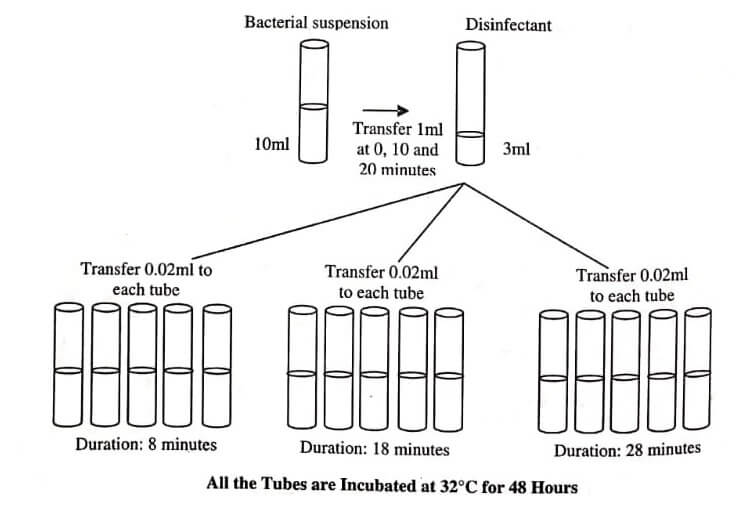
All the Tubes are Incubated at 32C for 48 Hours

Evaluation for Bacteriostatic and Bactericidal Actions

For the evaluation of efficiency, potency, and reactivity of disinfectants following techniques are used: Tube dilution and agar plate method, Cup-plate, filter paper, and cylinder plate method, Ditch-plate or giant colony method, Kelsey-Sykes test, In-use dilution test, Phenol coefficient test – Rideal-Walker test, and Chick-Martin test. Tube Dilution and Agar Plate Method The chemical disinfecting

Evaluation for Bacteriostatic and Bactericidal Actions Read More »

Factors Influencing Disinfection – Pedagogy Zone

Extent of antimicrobial action, rate of disinfection, and potency of a disinfectant depends on the following factors: Concentration of Disinfectant : Concentration of the disinfectant directly influences the rate of killing microorganisms. The curve obtained between the efficiency and concentration of disinfectant is generally exponential, rather than linear. Temperature : Normally, on increasing the temperature

Factors Influencing Disinfection – Pedagogy Zone Read More »

Classification of Disinfectants

Classification of Disinfectants – Pedagogy Zone

Disinfectants are classified on the basis of the following factors: Based on Consistency : On the basis of consistency or state of matter, disinfectant are of two types: Liquid (e.g., alcohols, phenols), and Gaseous (e.g., formaldehyde vapour). Based on Spectrum of Activity : On the basis of spectrum of activity, disinfectant are of three types: High Level

Classification of Disinfectants – Pedagogy Zone Read More »

Installation of an Air Filter System in a Fermenter

Sterilisation of Fermentation Air – Pedagogy Zone

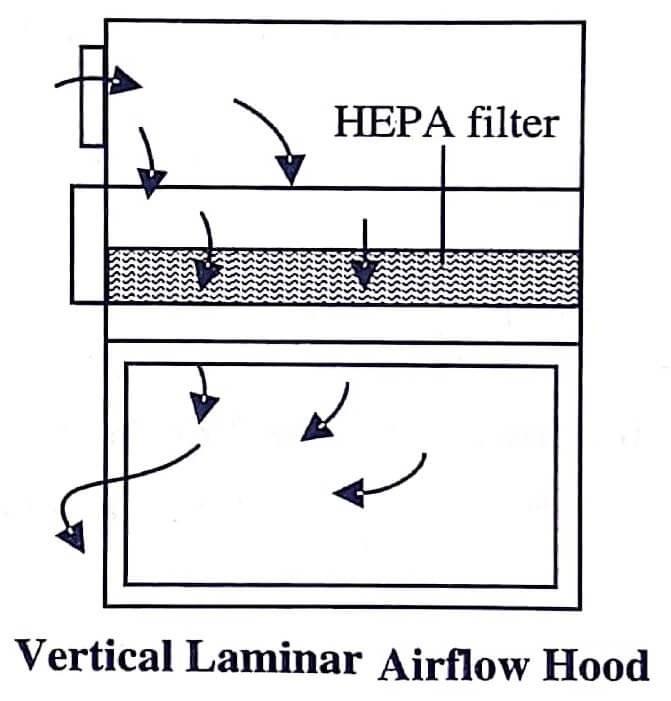
Industrial fermentation processes are mostly operated under vigorous aeration, maintaining the supply of sterilised air to the fermenter. Air filters should be attached to air input and exhaust ports for preventing the contamination of fermentation by air-borne microorganisms or of environment by aerosols generated within the fermenter. These air filters made up of glass fibre,

Sterilisation of Fermentation Air – Pedagogy Zone Read More »

Evaluation of Efficiency of Sterilization Methods

Evaluation of Efficiency of Sterilization Methods

Sterile products are free of microbes, pyrogens, and particulates. They also possess high standards of purity and quality. Therefore, the sterilisation methods used during the manufacturing of sterile products should be evaluated and subjected to complex validation procedures. The final fate of sterility relies on official sterility tests. A manufacturing procedure is said to be

Evaluation of Efficiency of Sterilization Methods Read More »

Citric Acid (Citrate) Utilization Test

Citric Acid (Citrate) Utilization Test – Pedagogy Zone

Salmonella typhi and Escherichia aerogen bacteria obtain carbon from citrate. This ability of utilizing citrate as the carbon and energy source is used as a distinguishing test for some Grods. Principle Simmons citrate agar containing sodium citrate as the carbon source is used to detect whether or not citrate is utilized by the organism. This

Citric Acid (Citrate) Utilization Test – Pedagogy Zone Read More »