Health Science

Emulsions : Introduction, Classification – Pedagogy Zone

A biphasic liquid preparation containing two immiscible liquids, one of which is dispersed as minute globules into the other, is termed as pharmaceutical emulsion. The liquid in the form of minute globules is the dispersed phase, while the liquid containing the dispersed globules is the continuous phase. An emulsifying agent is added to disperse two

Emulsions : Introduction, Classification – Pedagogy Zone Read More »

Formulations of Flocculated and Deflocculated Suspensions

flocculated and deflocculated suspension

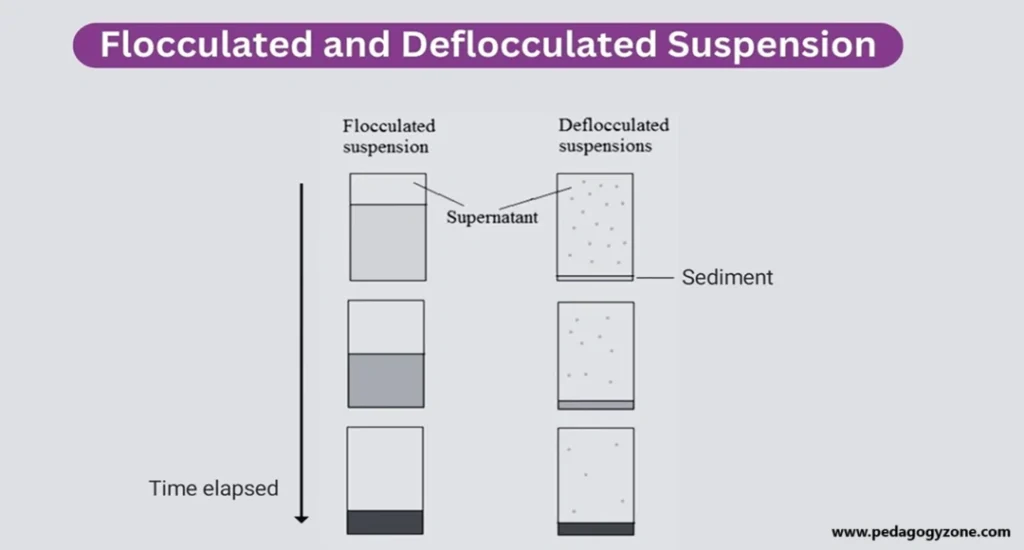
Flocculated and deflocculated suspension: The formulation of a suspension possessing optimal physical stability depends on whether the particles in suspension are to be flocculated or to remain deflocculated. First approach involves use of a structured vehicle to keep deflocculated particles in suspension; a second depends on controlled flocculation as a means of preventing cake formation.

Formulations of Flocculated and Deflocculated Suspensions Read More »

Flocculated and Deflocculated Suspensions

flocculated and deflocculated suspension

Flocculated and deflocculated suspension: The solid drug is crushed into smaller particles and then dispersed in a dispersion medium in order to prepare a suspension. As a result of crushing, the surface area of particles and their associated surface free energy increases. This makes the system thermodynamically unstable with highly energetic particles which regroup and

Flocculated and Deflocculated Suspensions Read More »

Classification of Dispersed Systems and Their General Characteristics

The dispersion system is categorised in the following three groups based on the size of dispersed particles: Molecular Dispersion: This system behaves as true solutions where the solute phase is present in the solvent phase. The solute (dispersed phase) is homogeneously distributed as separate molecules of size below 1nm (10-7 cm) throughout the solvent (dispersion

Classification of Dispersed Systems and Their General Characteristics Read More »

Large Scale Production Fermenter Design

Internal View of an Industrial Aerobic Fermenter

Industrial fermenter are either of anaerobic or aerobic classes. Anaerobic fermenters do not require much special equipment, except for the removal of heat generated during the fermentation process; on the contrary, aerobic fermenters require much elaborate equipment for adequate mixing and aeration. The industrial fermentation processes are mostly aerobic, thus a typical aerobic fermenter is

Large Scale Production Fermenter Design Read More »

Purification of MAbs – Pedagogy Zone

The desired antibodies should be extracted from a media sample of cultured hybridomas or a sample of ascites fluid. The contaminants in the cell culture sample consists of growth factors, hormones, and transferrins. The in vivo sample however, contains host antibodies, proteases, nucleases, nucleic acids, and viruses. Other secretions by the hybridomas (like cytokines) may

Purification of MAbs – Pedagogy Zone Read More »